Tapenade is a delightful Mediterranean condiment that can transform any dish with its rich, savoury flavour. This spread, primarily crafted from the humble olive, has earned its place as a beloved staple in many kitchens. It’s not just a culinary treat; it’s also a fantastic recipe for beginners looking to enhance their cooking skills.
Whether you’re hosting a dinner party or simply craving a quick snack, making tapenade at home is a rewarding experience. With just a few simple ingredients, you can create a dish that impresses your guests and adds a touch of Mediterranean flair to your meals. By mastering this easy recipe, you’ll not only elevate your culinary skills but also enjoy the authentic flavours and textures that come with it.
In this article, we will delve into the history of tapenade and guide you through the necessary steps to create your own delicious version. Get ready to explore the world of Mediterranean cuisine!
Key Takeaways
- Tapenade is a versatile Mediterranean condiment.
- It is primarily made from olives, offering a rich flavour.
- This recipe is suitable for beginners and can elevate your cooking.
- Making tapenade at home is rewarding and impressive.
- It adds authentic Mediterranean flavours to your meals.
Introduction to Tapenade
Creating your own tapenade at home is not only easy but also a delightful culinary adventure. This traditional Provençal dish is primarily made from black olives, capers, and high-quality olive oil, delivering a rich and robust flavour. The name “tapenade” itself is derived from the Provençal word for capers, highlighting the importance of this ingredient in the recipe.
Over time, while the dish has maintained its core elements, it has evolved to include various regional and modern variations. Its rising popularity can be attributed to its simplicity and versatility, making it an exceptionally tasty condiment to have on hand.
Historically, tapenade has been a staple in French cuisine, often served as an appetiser or a flavourful addition to a variety of local dishes. As one chef noted, “Tapenade is more than just a spread; it’s a taste of the Mediterranean on your plate.”
How to Make Tapenade at Home
Preparing tapenade in your own kitchen can be a simple yet satisfying cooking experience. To start, gather your ingredients. You will need a 290g jar of pitted kalamata black olives, which will yield about 160g when drained. This forms the base of your tapenade.
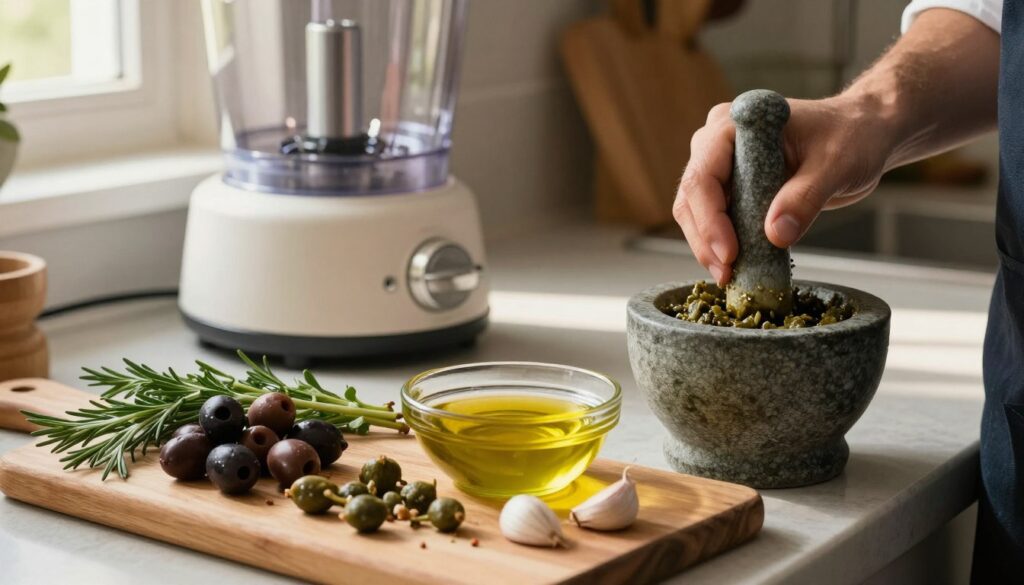
Using a food processor is the best way to blend your ingredients efficiently. In just 5 minutes, you can achieve a smooth consistency. Begin by placing the olives, capers, anchovies, and a splash of olive oil into the bowl of the processor. Don’t forget to add a pinch of salt and a dash of wine vinegar for flavour.
If you prefer a coarser texture, simply pulse the processor for a shorter time. This allows the lemon juice and other ingredients to combine beautifully. Once you have the desired consistency, transfer the mixture to a serving dish. Enjoy your homemade tapenade!
Essential Ingredients and Flavour Profiles
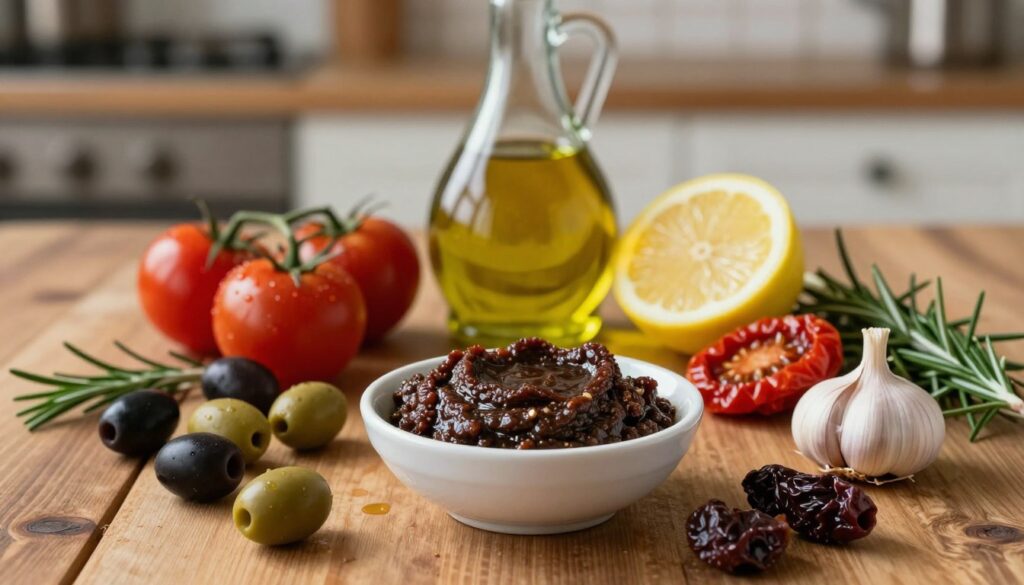
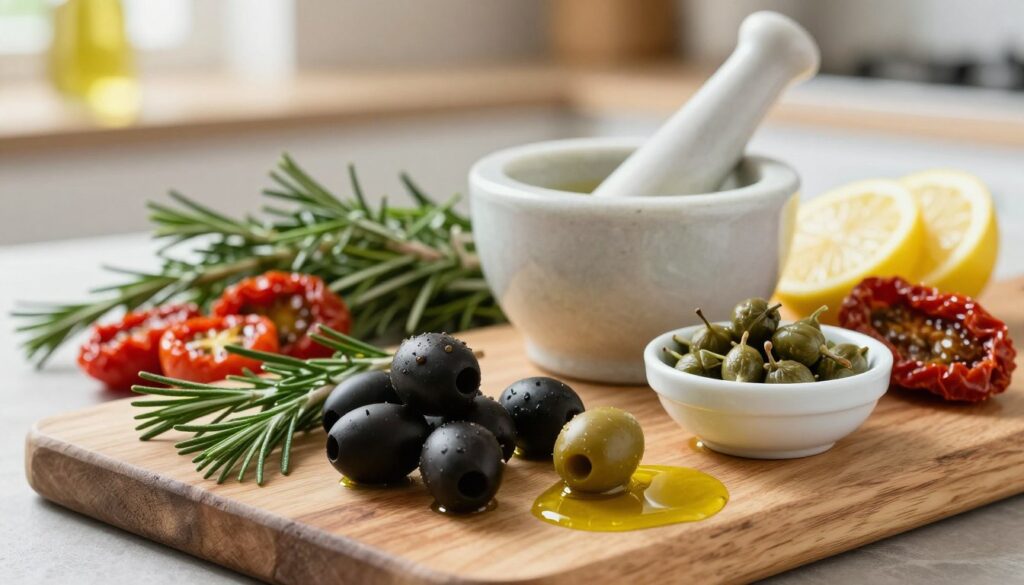
The process of creating tapenade is not just simple; it’s a journey into the heart of Mediterranean cuisine. At its core, this delightful spread relies on a few classic components. The traditional recipe includes 200g of pitted black olives, 2 tablespoons of capers, and 8 anchovy fillets. These ingredients form a deep, savoury foundation that is hard to resist.
For those looking to add a modern twist, consider incorporating 40g of sun-dried tomatoes and 1 tablespoon of lemon juice. This addition brings a zesty, sweet contrast that elevates the flavour profile. You can also enhance the mix with 1 small clove of garlic, 1/4 teaspoon of fennel seeds, and a pinch of chilli flakes for a touch of warmth.
Don’t forget about fresh herbs! Adding parsley not only complements the richness of the olive oil but also balances the saltiness of the capers. Best of all, preparing these components takes only a few minutes, resulting in a flavour far superior to any store-bought food product.
Serving Suggestions and Recipe Variations
Discover the joy of serving tapenade, a versatile condiment that complements a range of meals. This delightful spread can elevate any dish, making it a must-have in your kitchen.
Ideas for Serving as a Dip or Garnish
- Serve your tapenade as a dip with crunchy crackers or fresh bread, making it an ideal appetiser for any dinner party.
- A small bowl of this spread adds a salty contrast to a cheese board, enhancing the creaminess of the dairy.
Creative Ways to Incorporate Tapenade in Meals
- Swirl it through pasta for a quick and flavourful meal.
- Use it as a sauce for roasted meats, bringing a Mediterranean flair to your dishes.
- For a sophisticated touch, spread the mixture on a baguette, top it with goat’s cheese, and grill until bubbling.
With only 88 kcal per 25g serving, tapenade is a light yet satisfying way to add depth to your favourite recipes.
Tips for Customising Your Tapenade Recipe
Customising your tapenade recipe allows you to create a unique spread tailored to your taste. Start by adjusting the seasonings and texture to match your preference. To achieve your desired consistency, use your food processor to blitz the ingredients until smooth or slightly coarse.
If the mixture feels too thick, simply add a splash of olive oil or a squeeze of lemon juice. This will help the processor blades move more effectively, ensuring a perfect blend.
When it comes to storage, your homemade creation can be kept in the fridge for up to three days. This makes it a convenient make-ahead recipe for your next party.
Don’t hesitate to experiment with additional flavours! Ingredients like garlic, parsley, or even a splash of red wine can elevate your recipes. Always taste your dip before serving, adjusting with a pinch of salt or extra anchovies if needed.
Conclusion
Making tapenade at home is a straightforward and fulfilling process that allows you to control the quality of every ingredient. By using high-quality olives, you ensure a final result rich in authentic Mediterranean flavours. This versatile condiment can serve as a delightful dip or be incorporated into various recipes, making it a kitchen favourite.
Don’t hesitate to experiment with additions like garlic to tailor the flavour profile to your preferences. We hope this guide has inspired you to create your own delicious versions of this timeless olive spread today!