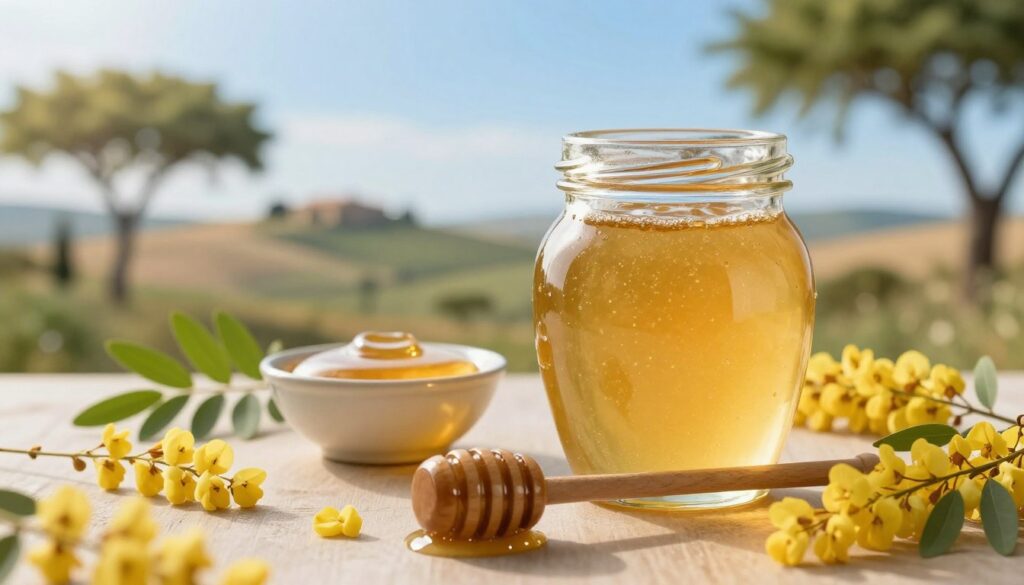
Acacia honey is a pale-gold Italian favourite, renowned for its delicate flavour and almost transparent appearance. This unique variety sets itself apart from the darker traditional honeys, captivating those who seek a gentler taste. Produced by bees collecting nectar from the Robinia pseudoacacia, commonly known as the black locust tree, this honey offers a clean floral aroma.
With a subtle vanilla sweetness and smooth texture, it has gained popularity across Europe, where it is often referred to as miele di robinia in Italy and locust honey in the United States. One tablespoon, approximately 21 grams, contains around 60 calories and 17 grams of sugar, highlighting the importance of moderation.
In this guide, we will explore everything you need to know about this exquisite honey, including its nutritional value, antioxidant content, potential health benefits, storage tips, and versatile culinary uses.
Introduction to Acacia Honey
The exquisite nectar sourced from the black locust tree is a favourite among honey enthusiasts. This monofloral product, known as acacia honey, is derived from the nectar of Robinia pseudoacacia, commonly referred to as the false acacia or black locust tree.
Its journey began in the Appalachian region of North America, where it was introduced to Europe in the 17th century. Today, Romania, Hungary, and Bulgaria are vital sources of this honey, boasting dense stands of Robinia that bloom for just two to three weeks in late May and early June.
With its fragrant white flowers, this tree produces honey that is pale in colour, with a clean aroma and a subtle vanilla note. In France, it is known as miel d’acacia, while in Italy, it is called miele di robinia, and in the United States, it is commonly referred to as black locust honey.
For example, Dragos Nistor, a six-generation beekeeper and founder of HoneyBee & Co., exemplifies the rich heritage of this honey. His family has maintained Transylvanian apiaries, ensuring the authenticity and quality of their product.
The Unique Properties of Acacia Honey
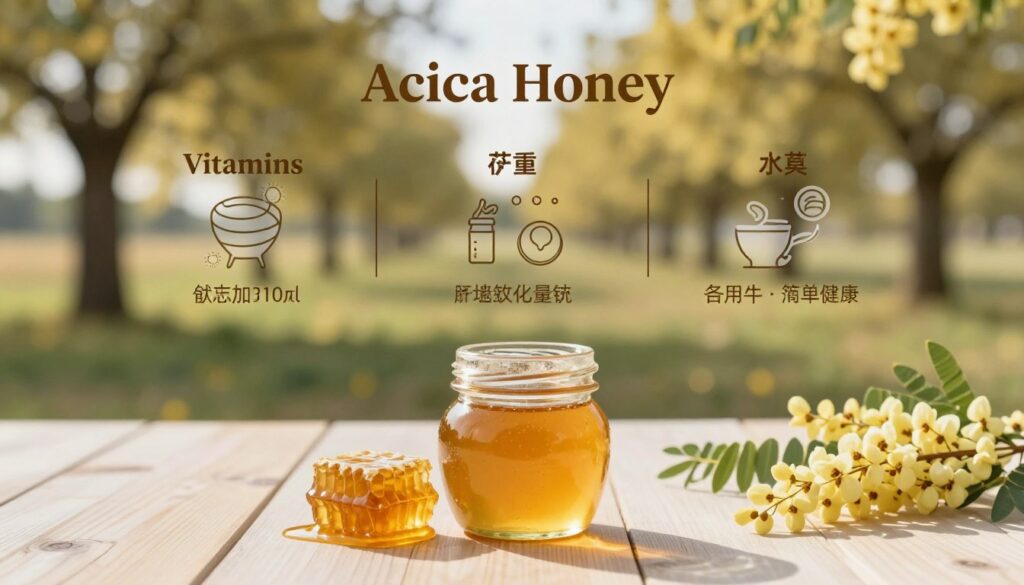
Characterised by its almost transparent appearance, this honey is rich in beneficial properties. One tablespoon, or 21 grams, provides approximately 60 calories and 17 grams of sugar. Its main carbohydrates include glucose, sucrose, and fructose, with fructose being the predominant sugar. This high fructose content contributes to its unique sweetness and smooth texture.
Acacia honey contains small amounts of vitamin C and magnesium, but it is low in protein, fat, and fibre. Notably, it is also rich in antioxidants such as flavonoids, polyphenols, and beta carotene, which support overall health.
With a glycaemic index of around 32, it may appeal to those monitoring blood sugar levels. Unlike other types, glucose crystallises quickly, while fructose does so slowly. This allows raw acacia honey to remain liquid for 12 months or longer without heating or processing.
Crystallisation does not indicate spoilage; gentle warming can return it to a pourable state. As many enthusiasts say, “The true essence of acacia honey lies in its remarkable ability to maintain its form and flavour.”
acacia honey Health Benefits
The health benefits of acacia honey are as diverse as they are remarkable. This sweet treat is packed with natural properties that support overall well-being. Raw acacia honey contains flavonoids and polyphenols, which act as powerful antioxidants. These compounds help protect cells from free-radical damage, promoting better health.
Additionally, the honey’s natural antibacterial properties are linked to glucose oxidase enzymes. These enzymes gradually produce hydrogen peroxide, which has been shown to combat bacteria like Staphylococcus aureus and Pseudomonas aeruginosa. While these findings are promising, it is essential to note that more human research is needed.
Acacia honey is also used in traditional wound care, helping to maintain moisture and create a protective barrier. Animal studies suggest that it may accelerate healing. Furthermore, this honey has found its way into skincare products, particularly for acne treatments, although direct evidence is limited.
However, it’s crucial to remember that acacia honey is not safe for infants under 12 months due to the risk of botulism. People with diabetes or allergies to bees or honey should consult a healthcare professional before incorporating this sweetener into their diet.
Culinary Uses and Versatility
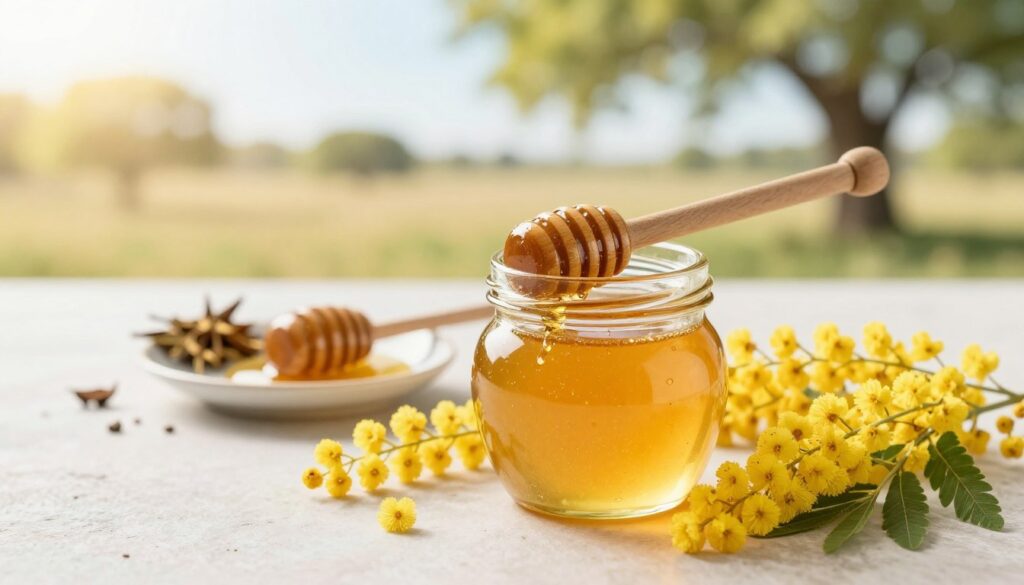
A versatile ingredient, this honey adds a touch of elegance to both simple and complex recipes. Its mild floral sweetness enhances dishes without overwhelming them, making it a favourite among chefs and home cooks alike.
Enhancing Beverages, Breakfasts, and Baking Recipes
This honey pairs beautifully with Earl Grey, green tea, and chamomile. Its delicate flavour does not dominate these drinks, allowing for a balanced taste. Add it to your favourite tea after it cools slightly to preserve its natural enzymes.
In the morning, drizzle it over oats, yoghurt, or granola. Its smooth texture distributes evenly, making breakfast delightful. It can also replace refined sugar in baking, adding a subtle vanilla character to sponges and dressings.
Pairing with Cheeses and Other Flavour-Sensitive Dishes
This honey complements a variety of cheeses. Try it with ricotta, brie, or fresh goat’s cheese for a sweet-and-creamy combination. For a contrasting experience, pair it with savoury cheeses like gorgonzola or Stilton.
A popular recommendation is to serve it with a blue cheese and pecan salad. This dish beautifully balances sweetness, saltiness, and texture, showcasing the honey’s versatility.
How to Store and Enjoy Your Acacia Honey
To fully enjoy this delightful nectar, understanding its storage is essential. Proper techniques can help maintain its unique qualities and ensure it remains a liquid delight for longer.
Proper Storage Techniques for Maintaining Its Liquid Form
Store the jar closed at room temperature, away from direct sunlight, excessive heat, and moisture. This will help preserve its flavour and texture. While this sweet treat can remain liquid for 12 months or longer, crystallisation is a natural process that occurs.
If crystallisation happens, simply place the sealed jar in warm water, no hotter than 40°C, for 15 to 20 minutes. Avoid microwaving or overheating, as excessive heat may damage delicate enzymes and flavour compounds.
Everyday Tips for Incorporating Acacia Honey into Meals
Incorporate this nectar into your daily meals easily. Here are some serving ideas:
- Spread it on toast or crumpets.
- Mix it into porridge or yoghurt.
- Drizzle over fresh fruit.
- Add it to warm drinks for a sweet touch.
Available sizes include 120 g, 400 g, and 1 kg. Consider keeping a smaller jar for daily use and a larger one for family breakfasts. Always use a clean spoon to avoid contamination.
With a reported 4.9-star rating from 53 reviews, this sweet treat is a favourite among many. Enjoy the delightful taste while taking care of your storage!
| Jar Size | Weight (g) | Best For |
|---|---|---|
| Small | 120 | Daily use |
| Medium | 400 | Family breakfasts |
| Large | 1000 | Regular use |
Conclusion
This delicate nectar, sourced from the black locust tree, stands out in the world of sweeteners. Its pale colour, almost transparent appearance, and floral aroma make it especially appealing for everyday use.
The high fructose-to-glucose ratio explains why genuine raw honey remains liquid longer than many other varieties. This quality, combined with its antioxidant and antibacterial properties, enhances its value, though it’s essential to consult professionals for health-related advice.
Moreover, its culinary versatility shines through in various dishes, from tea and breakfast foods to baking and dressings. Pair it with soft cheeses or use it in blue cheese dishes for a delightful contrast.
Remember, this sweet treat should be consumed in moderation and never given to children under 12 months. Enjoy the benefits while being mindful of responsible use!