Creating your own chilli oil at home is a rewarding experience. It allows you to control the quality of ingredients, ensuring a flavour that far surpasses any store-bought versions. This versatile condiment can elevate simple dishes, turning a basic bowl of fried rice or breakfast eggs into a gourmet delight with just a drizzle.
Since the original recipe was shared on August 10, 2015, it has become a staple for many home cooks seeking authentic taste. You can easily follow the expert guidance available on The Woks of Life YouTube channel to master the technique of infusing heat into your cooking.
Whether you are a novice or a seasoned chef, this guide will provide essential steps to create the perfect batch of chilli oil. By selecting the right shallots, spices, and peppercorns, you can craft a depth of flavour that enhances every meal.
A well-made bowl of this oil is not just a topping; it is a culinary tool that brings heat and complexity to your favourite dishes. Join us as we explore how to balance the heat and aromatics, ensuring your homemade version is better than anything available in shops.
Key Takeaways
- Making your own chilli oil allows for quality control of ingredients.
- This condiment can transform everyday meals into gourmet experiences.
- The original recipe has become a foundational element for many cooks.
- Expert tutorials are available for mastering the technique.
- Selecting the right ingredients enhances the flavour of your dishes.
- A well-crafted chilli oil is a versatile culinary tool.
Introduction to Italian Chilli Oil
Olio di peperoncino embodies the spirit of Italian cooking, steeped in tradition. This delightful condiment originates from the southern region of Calabria, where it has been a staple for generations. While many associate chilli oil with Asian cuisine, its Italian counterpart has gained modern popularity among home cooks.
As culinary enthusiasts discover how simple it is to create a custom recipe, the demand for this spicy infusion has surged. In regions like Sichuan and Hunan, similar oils are essential in daily cooking, showcasing their versatility across cultures.
By infusing high-quality oil with garlic, shallots, and a blend of spices, you can replicate the authentic flavours found in professional kitchens. Understanding the origins of this oil also helps you appreciate the careful selection of peppercorns and flakes that achieve the perfect balance of heat and flavour.
Whether you are preparing traditional dishes or experimenting with new recipes, this oil remains a beloved addition to any pantry.
Essential Ingredients for Your Chilli Oil Recipe
Crafting your own spicy infusion at home can be an exciting culinary adventure. To achieve the best results, it’s crucial to select high-quality ingredients. The right combination of aromatics and spices will elevate your homemade version above store-bought options.
Essential Aromatics and Spices
Start with essential aromatics like star anise, cinnamon sticks, and bay leaves. These ingredients add depth and warmth to your recipe. Additionally, incorporating aromatic Sichuan peppercorns will enhance the flavour profile.
Selecting the Best Oil
When choosing your base, consider using neutral oils like grapeseed or canola. However, for a distinctive Italian twist, high-quality olive oil is recommended. It provides a rich flavour that complements the spices beautifully.
Don’t forget to add garlic, shallots, and toasted sesame seeds. These ingredients introduce a complex layer of umami, setting your homemade infusion apart. Lastly, a pinch of salt is essential to enhance the natural flavours of the peppers and aromatics.
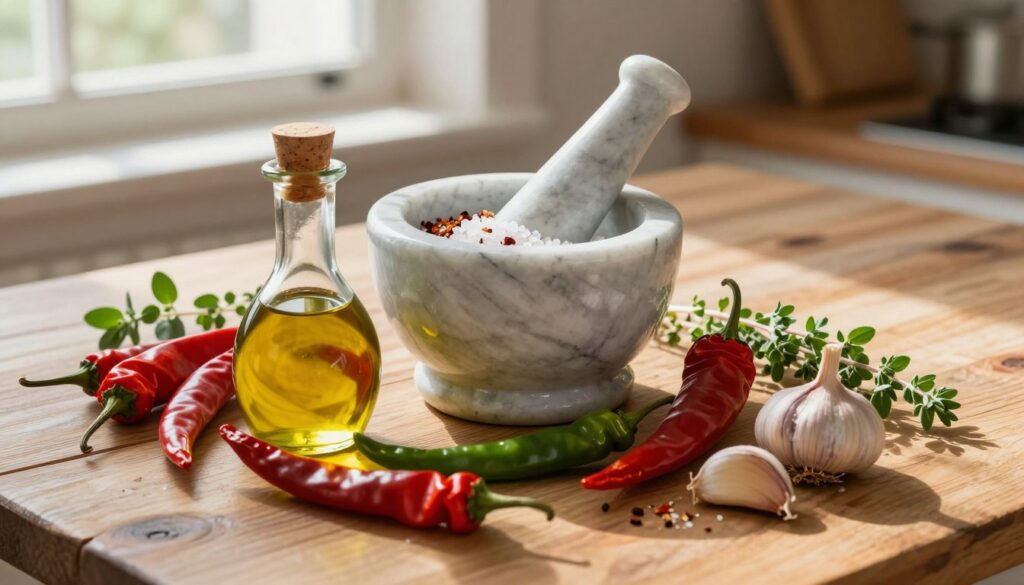
How to Make Chilli Oil: A Step-by-Step Guide
Embarking on the journey to create your own infused oil is both simple and rewarding. Follow these steps to ensure a perfect blend of flavours and aromas in your homemade concoction.
Infusing the Oil with Aromatics
Begin by placing your chosen oil and aromatics, such as garlic and shallots, into a pan. Make sure there is at least two inches of clearance from the rim. This allows for safe heating without overflow.
Monitoring Oil Temperature and Timing
Maintain the medium heat at approximately 225-250°F. This temperature is crucial for allowing the spices to release their essence without becoming dark or bitter. Monitor the time closely; a duration of 30 to 60 minutes is ideal for extracting full flavour.
Combining with Chili Flakes
Once the oil is infused, carefully pour the hot infused oil over your chili flakes in a heatproof bowl. You will notice a delightful popcorn-like aroma, indicating the perfect balance of heat. After infusion, remove the garlic and shallots to prevent burning.
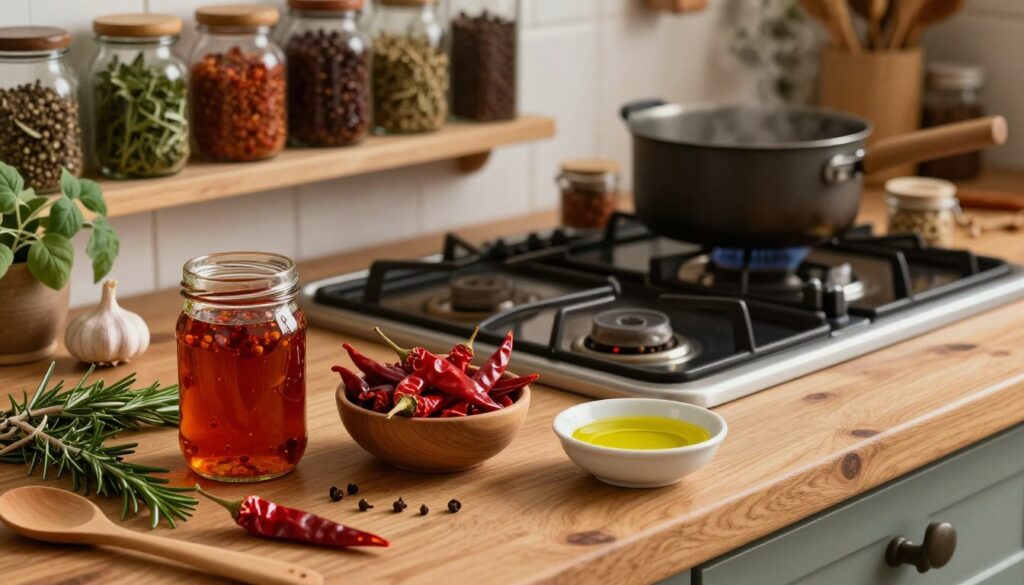
This method ensures your homemade chilli oil is vibrant and fragrant, ready to be stored in a clean jar for future use.
Achieving the Perfect Infusion and Flavour Balance
Mastering the art of infusion at home can lead to delightful culinary discoveries. The secret to a successful infused recipe lies in the precise control of timing and temperature. Using a tool like the Thermoworks Thermapen ONE can help ensure your oil reaches the perfect heat without burning.
When preparing your chilli oil, make sure to carefully pour the hot oil over the flakes only when it reaches the right temperature for your specific variety. Different brands have varying moisture levels, which can affect the infusion process.
To perfect your technique, it’s wise to test the oil on a small amount of flakes in a heatproof bowl before committing the entire batch. The way you manage the medium heat in your pan will determine whether your final product is bright red or over-toasted.
Consistent timing is vital; if the oil is too hot, the spices will burn, but if it is too cool, the flavour will be weak. By refining your approach, you can create an infused oil that highlights the unique characteristics of your chosen peppers and aromatics.
Versatile Culinary Applications of Chilli Oil
Unlock the full potential of your culinary creations with homemade infused oil. This condiment is not just a flavour enhancer; it’s a gateway to exciting dishes. Here are some ways to incorporate it into your cooking.
Traditional Italian Dishes Enhanced with Flavour
Drizzle your homemade chilli oil over antipasto platters, fresh cheeses, or simple pasta sauces. This oil adds a delightful kick that transforms traditional recipes into extraordinary meals.
Modern Fusion Recipes and Creative Uses
Incorporate this versatile condiment into breakfast dishes, like eggs on avocado toast, for a surprising burst of heat. For a deeper umami profile, mix in a small amount of soy sauce or sesame oil when serving.
Additionally, the oil complements starches in rice and noodle recipes, making it a must-have for meal planning. Keep a jar in your refrigerator to elevate everything from soups to roasted vegetables.
Don’t hesitate to experiment! Adding it to dressings or marinades can unlock the full potential of this spicy ingredient.
Expert Tips, Food Safety and Troubleshooting
Ensuring the longevity and safety of your homemade condiment is essential for every cook. Proper storage and handling can significantly enhance the quality of your infused oil. Follow these guidelines to keep your spicy creation fresh and delicious.
Food Safety and Storage Guidelines
- Store your homemade chilli oil in an airtight jar within the refrigerator for up to 6 months.
- If you notice bulging lids, strange smells, or gas buildup, dispose of the oil immediately as these are signs of potential spoilage.
- Always use clean utensils when handling your condiment to prevent the introduction of bacteria, especially if you have added raw garlic or shallots.
Troubleshooting Common Issues
If your batch lacks flavour, consider adjusting the ratio of spices or the time spent infusing the oil. For safety, you can follow guidelines from the PennState Extension regarding the acidification of fresh ingredients before infusion.
Remember that adding sugar or soy sauce to the main batch can change the shelf life, so it is best to add these to individual dishes. By following these expert tips, you can enjoy your spicy oil with confidence, knowing you have taken the necessary steps to ensure quality.
Conclusion
Elevating your culinary skills with homemade spicy infusions can be a delightful experience. Mastering the art of making this condiment at home provides you with a superior addition that enhances countless recipes and dishes.
By carefully controlling the heat and selecting high-quality ingredients, you can create a flavour profile that suits your taste perfectly. Always remember to prioritise food safety by using clean utensils and storing your oil in the refrigerator for up to six months.
Whether you drizzle it over eggs, rice, or use it as a base for a complex sauce, this oil is a kitchen essential. We hope this guide inspires you to experiment with different spices, soy sauce, and aromatics to find your perfect signature blend.
Enjoy the process of creating your own spicy infusions and sharing the delicious results with friends and family!