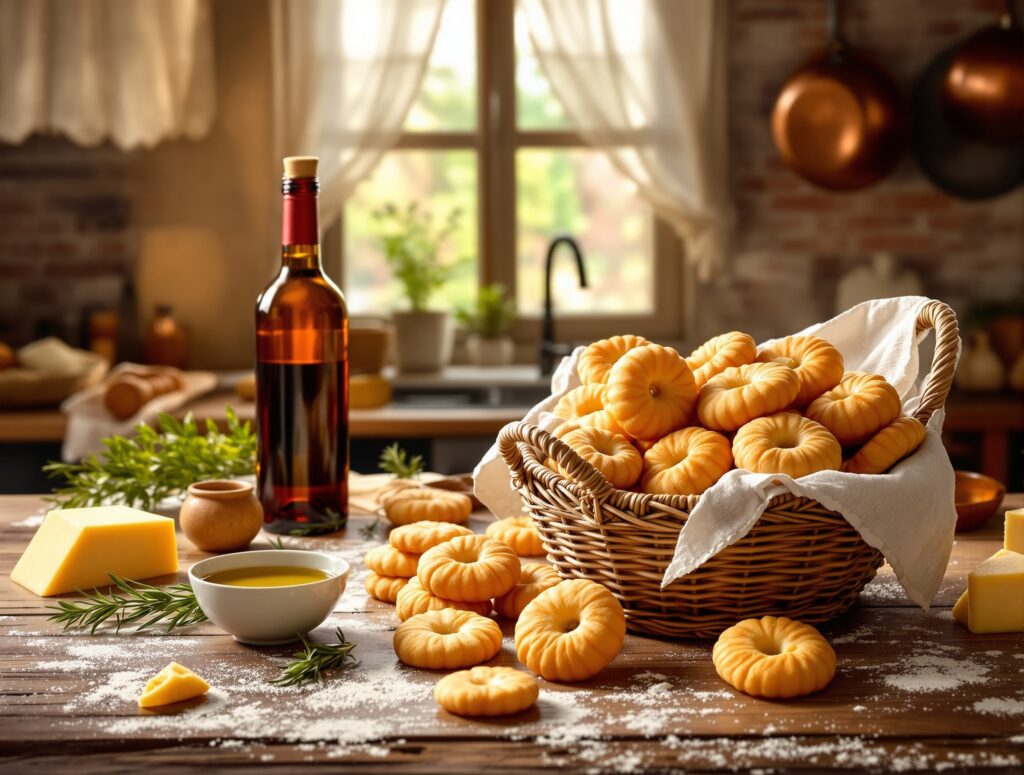
Italian Taralli are a beloved snack hailing from southern Italy, particularly the Puglia region. Known for their irresistible crunch and distinctive ring shape, these savory biscuits are crafted from a straightforward blend of flour, extra virgin olive oil, and white wine. To elevate their flavor, they’re typically seasoned with:
- fennel seeds,
- black pepper,
- a pinch of chili flakes.
A staple in Italian cuisine, Taralli shine as versatile treats. They often accompany aperitivo or feature prominently on antipasto platters. What sets them apart is their unique preparation method: the dough rings are briefly boiled before being baked to perfection. This process results in a texture that’s both satisfyingly crisp and delicately crumbly.
Celebrated for their simplicity and adaptability, Taralli make an excellent pairing with wine or other drinks. Their minimal ingredients frequently render them vegan-friendly as well. More than just a snack, these delightful biscuits embody the rich culinary heritage of regions like Puglia while delivering timeless flavor in every bite.
What Are Taralli?
Taralli are a classic Italian treat, instantly recognizable by their small ring shape and strong ties to the Puglia region in southern Italy. Known for their satisfying crunch and savory flavor, they also come in sweet variations. Made from a simple mix of flour, olive oil, white wine, and salt, these biscuits can be enhanced with seasonings like fennel seeds, black pepper, or chili flakes for an added kick.
One unique aspect of Taralli preparation is the boiling step that precedes baking. This quick boil is key to achieving their distinctive crisp texture before they’re baked to a golden perfection. The result is a versatile snack that pairs wonderfully with wine or antipasti platters.
- traditionally vegan due to their straightforward ingredients,
- earned a reputation as both a social snack and a solo indulgence alongside your favorite drink,
- capture the essence of Puglia’s culinary traditions while offering universal appeal through their irresistible crunch and adaptable flavors.
It’s no wonder they’ve become such a cherished part of Italian cuisine.
The Origins of Taralli
Taralli trace their roots back to Puglia, a picturesque region in southern Italy celebrated for its vibrant culinary traditions. These cherished snacks hold a special place in the area’s history and culture, often intertwined with family customs handed down through the ages. Originally crafted as a resourceful way to utilize simple local ingredients like flour, olive oil, and wine, they soon became a dietary staple.
In the past, making Taralli was more than just cooking—it was a communal ritual. Families would come together to shape these iconic ring-shaped treats, with grandparents frequently taking charge of the process. This practice not only kept treasured recipes alive but also fostered stronger family connections and reinforced cultural heritage.
Today, Taralli continue to be an integral part of Puglia’s culinary scene. They embody both tradition and creativity, having transformed over time from humble fare into versatile snacks enjoyed across Italy and even abroad—whether during casual moments or on special occasions.
Traditional Ingredients Used in Taralli
The ingredients that go into making Taralli showcase their straightforward nature and strong connection to southern Italian culinary traditions. These crisp, ring-like biscuits are crafted from a mix of all-purpose and bread flours, which together create the ideal structure and texture. A hint of fine sea salt brings out the flavor without dominating it.
White wine is a key component, contributing mild acidity and helping achieve the characteristic crunch during baking. Meanwhile, extra virgin olive oil adds richness, keeping the interior tender while ensuring the exterior stays satisfyingly crispy.
When it comes to seasoning, there are several options:
- fennel seeds offer a delicate anise-like fragrance,
- chili flakes can add a gentle heat,
- garlic powder provides an intense depth of flavor.
These options allow for endless variations inspired by regional preferences or individual tastes while still staying true to Taralli’s authentic roots.
Regional Variations of Taralli
Italy’s culinary richness shines through the regional variations of Taralli, a beloved snack that evolves uniquely across the country. While Puglia is often considered its birthplace, other southern regions like Campania, Basilicata, Calabria, and Sicily have put their own distinctive spin on this traditional treat, reflecting local flavors and customs.
In Puglia, where the classic version originated, simplicity reigns. The recipe typically incorporates fennel seeds or black pepper for seasoning and relies on high-quality staples like olive oil and white wine. Just next door in Campania, Taralli take on a different form. Here, they’re often braided and made with lard instead of olive oil. Almonds or spicy seasonings are frequently added to bring extra depth to the flavor.
Basilicata offers another creative twist with “sacaldatelli,” which are shaped like figure eights rather than rings. These snacks are traditionally enjoyed dipped in soups or milk during breakfast. Moving further south to Calabria, bold flavors dominate. Chili peppers or nduja—a fiery spreadable sausage—are commonly used to give their Taralli a signature kick.
Sicily adds its own flair by introducing sweet versions flavored with citrus zest or glazed with honey. Savory varieties also thrive here, often infused with local herbs such as oregano. This delicate balance between sweet and savory reflects Sicily’s culinary tradition of harmonizing contrasting tastes.
These regional adaptations not only demonstrate the versatility of Taralli but also serve as a testament to Italy’s vibrant food culture and its commitment to celebrating diverse flavors through time-honored recipes.
Sweet vs. Savory Taralli: Key Differences
The main distinction between sweet and savory Taralli lies in their taste and ingredients.
- savory Taralli often feature bold flavors such as fennel or black pepper, delivering a rich, aromatic profile,
- for an extra kick, chili flakes may be included, making them an excellent choice for appetizers or wine accompaniments,
- sweet Taralli are crafted with sugar or natural sweeteners and frequently infused with anise or citrus zest for a fragrant, delicate flavor.
While savory varieties dominate traditional recipes and cultural traditions, the sweeter versions provide a unique dessert-like spin that showcases local creativity.
Flavoring Taralli: Traditional and Modern Options
Traditionally, Taralli are flavored with fennel seeds, black pepper, or chili flakes, each adding its own unique character. Fennel seeds impart a gentle anise-like fragrance, while black pepper delivers a bold, earthy kick, and for those craving a bit more heat, chili flakes offer a fiery touch. These timeless seasonings reflect the heart of southern Italian cooking, celebrated for its simplicity and adherence to tradition.
Nowadays, the range of flavors for Taralli has expanded significantly, sparking creativity in kitchens everywhere. Garlic powder has become a popular addition, enhancing their savory depth. Aromatic herbs like rosemary and oregano or spices such as paprika introduce fresh herbal or smoky dimensions. Some even incorporate sun-dried tomatoes or olives for a Mediterranean-inspired flair.
What makes Taralli truly special is their ability to bridge the gap between tradition and innovation. Whether you stick to the classic fennel flavor or venture into combinations like garlic with rosemary or chili paired with smoked paprika, these crispy treats effortlessly adapt to diverse tastes while maintaining their irresistible crunch and charm.
Why Taralli Are a Gastronomic Symbol of Puglia
Taralli hold a cherished spot in Puglia’s cultural landscape, representing the rich culinary traditions of the region. These ring-shaped treats trace their origins to southern Italy, where they were born from the clever use of basic, local ingredients like flour, olive oil, and wine. Over time, they have grown into a symbol of Puglian identity.
In this part of Italy, Taralli are far more than just a simple snack; they carry deep emotional and cultural meaning. Traditionally, making them was an activity that brought families together. The process of shaping dough into rings became a treasured ritual handed down through generations. Even today, these snacks play a key role in festive occasions and social gatherings throughout Puglia.
The recipe itself is a testament to the creativity of Puglian cuisine—simple yet refined:
- flour,
- extra virgin olive oil,
- white wine.
Staples such as extra virgin olive oil and white wine capture the essence of local flavors, while seasonings like fennel seeds or black pepper lend them their unique character.
What makes Taralli even more special is their incredible versatility. They pair effortlessly with aperitifs or antipasto platters, perfectly embodying the convivial spirit of Italian dining. Their enduring appeal both within Italy and abroad continues to highlight Puglia’s rich gastronomic heritage for people around the globe.
The Role of Taralli in Italian Cuisine
Taralli hold a cherished spot in Italian cuisine, celebrated for their adaptability as both a snack and an appetizer. These iconic ring-shaped biscuits pair beautifully with wine, perfectly complementing Italy’s aperitivo tradition. They’re also a delightful addition to charcuterie boards or antipasto platters, highlighting their importance in both social and culinary settings. Crafted from humble ingredients like flour, olive oil, and white wine, taralli reflect the Italian philosophy of using simple, high-quality components to create something truly special.
Their appeal extends far beyond wine pairings. Taralli are just as enjoyable when served with dips such as hummus or tzatziki, as well as spreads like tapenade or pâté, catering to a variety of tastes. Whether enjoyed at laid-back gatherings or more formal events, their satisfying crunch and incredible versatility have made them a beloved staple in Italian food culture.
How to Make Authentic Taralli at Home
Making homemade Taralli is an easy and rewarding way to create crunchy, flavorful snacks. Begin by combining a mix of all-purpose and bread flours with a pinch of fine sea salt in a bowl. For an extra burst of flavor, add seasonings such as fennel seeds or black pepper. Slowly incorporate white wine and extra virgin olive oil until the mixture forms a smooth dough.
Transfer the dough to a lightly floured surface and knead it for about 8–10 minutes until it becomes elastic and pliable. Allow it to rest for half an hour, which helps relax the gluten and makes shaping easier. Once rested, divide the dough into small pieces, rolling each into thin ropes approximately 4–5 inches long. Form these ropes into rings by joining their ends together and pressing gently.
- heat a pot of water until it gently simmers,
- drop in several rings at a time,
- let them boil briefly until they float to the surface,
- use a slotted spoon to remove them from the water,
- place them on a clean kitchen towel to dry slightly.
Meanwhile, preheat your oven to 375°F (190°C). Arrange the boiled rings onto parchment-lined baking trays, ensuring they have enough space between them. Bake for 25–30 minutes or until they turn golden brown, filling your home with their irresistible aroma. Once out of the oven, let them cool completely on wire racks—this step ensures maximum crispness.
Store your freshly made Taralli in an airtight container; they’ll stay deliciously crunchy for up to two weeks. Enjoy these versatile snacks on their own or serve alongside wine, cheese platters, or dips like hummus for an authentic Italian experience right from your kitchen!