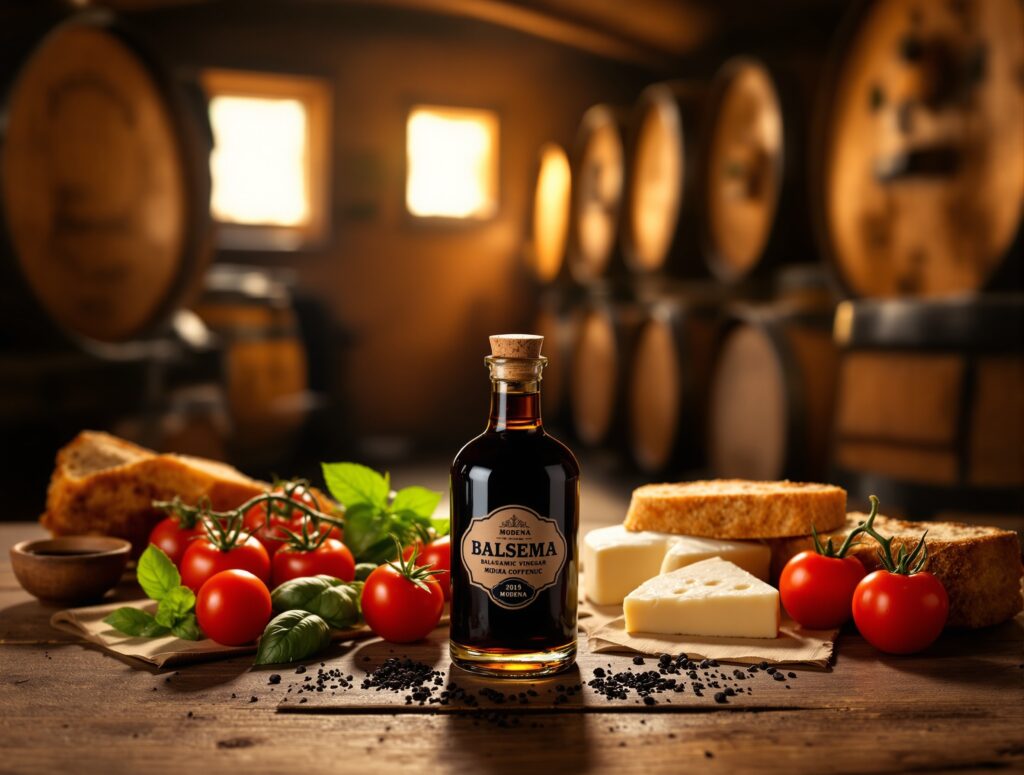
Balsamic Vinegar from Modena is a renowned Italian condiment celebrated for its deep-rooted history, distinctive taste, and essential place in Italian cuisine. Originating in Italy’s Modena region, it is primarily crafted from grape must, which is carefully cooked down and then aged in wooden barrels. This meticulous aging process imparts its characteristic blend of sweet and tangy flavors, making it a versatile addition to countless dishes.
With traditions dating back to 1605, this vinegar carries immense cultural significance. It also holds the prestigious Protected Geographical Indication (PGI) status from the EU, ensuring that only vinegar produced in this specific area using time-honored methods can bear the name “Balsamic Vinegar from Modena.”
Introduction to Balsamic Vinegar from Modena
Balsamic Vinegar from Modena is a treasured gem of Italian cuisine, admired for its deep flavor and historical significance. Exclusively crafted in the Modena region of Italy, it combines sweet and tangy notes through an intricate production process. Made from grape must and wine vinegar, the mixture spends time aging in wooden barrels, developing its signature taste. Since 2009, it has proudly carried Protected Geographical Indication (PGI) status, ensuring high standards that preserve both its authenticity and exceptional quality.
The aging process plays a crucial role in shaping its unique character:
- a minimum aging period of 60 days is required,
- some varieties are aged for over three years,
- longer-matured versions, known as “invecchiato,” boast enhanced qualities.
These “invecchiato” varieties reveal a rich brown hue, striking clarity, and a perfectly balanced blend of sweetness and acidity.
Praised for its incredible versatility, Balsamic Vinegar from Modena transforms everything from simple salads to exquisite gourmet creations. Its worldwide acclaim as a top-tier condiment reflects not just its remarkable flavor but also the enduring legacy of Italian craftsmanship and tradition.
The History and Tradition of Balsamic Vinegar from Modena
The tale of Balsamic Vinegar from Modena is deeply woven into the fabric of Italy’s Emilia-Romagna region, reflecting its rich culture and traditions. Its origins can be traced back to the 17th century, when it was first cherished as a prized product in Modena. The process of creating this iconic vinegar begins with the local grape harvest, particularly varieties like Trebbiano and Lambrusco, which are transformed into grape must—the essential foundation of this celebrated condiment.
For generations, families have passed down the art of making balsamic vinegar, preserving an ancient recipe that embodies Modena’s culinary heritage. Historically, it wasn’t just admired for its unique flavor but was also believed to possess medicinal properties. The name “balsamic” itself derives from “balsam,” a nod to its traditional role as a remedy.
The global appreciation for balsamic vinegar took off after World War II, fueled by a growing fascination with Italian cuisine. In 2009, its significance received formal recognition when the European Union granted it Protected Geographical Indication (PGI) status. This certification guarantees that only vinegar produced under strict guidelines within the Modena region can bear the prestigious name.
Today, Balsamic Vinegar from Modena is more than just a condiment—it’s a symbol of Italian artistry and tradition. Revered worldwide for its distinctive flavor and storied past, it continues to represent centuries of craftsmanship and cultural pride.
What Makes Balsamic Vinegar from Modena Unique?
Balsamic Vinegar from Modena is renowned for its Protected Geographical Indication (PGI) status, a mark that ensures it’s exclusively crafted in the Modena region using time-honored methods. This certification not only guarantees authenticity but also ties the vinegar to its distinctive geographical roots. To meet these rigorous standards, it’s produced by combining grape must with wine vinegar, with a small allowance of up to 2% caramel for coloring.
What truly sets this vinegar apart is its aging process:
- it spends at least 60 days maturing in wooden barrels,
- this process imparts its signature sweet and tangy taste,
- when aged further, it develops into richer and more intricate varieties known as “invecchiato.”
The barrels themselves, made from premium woods like oak and chestnut, contribute subtle yet unique aromatic touches to the final product.
Visually striking with its clear consistency and deep brown hue, this vinegar boasts an exquisite balance of sweetness and acidity—a testament to the craftsmanship behind each bottle. Balsamic Vinegar from Modena is a true celebration of Italian culinary heritage and artistry.
The Protected Geographical Indication (PGI) Status of Balsamic Vinegar from Modena
The Protected Geographical Indication (PGI) status granted to Balsamic Vinegar from Modena on July 3, 2009, represents a significant milestone in safeguarding the rich heritage and exceptional quality of this renowned Italian condiment. This certification guarantees that only vinegar produced in the Modena region under strict guidelines can carry the name “Balsamic Vinegar from Modena,” protecting traditional craftsmanship while helping buyers distinguish authentic products from imitations.
To earn the PGI label, producers must adhere to rigorous criteria:
- crafted using a combination of locally sourced grape must and wine vinegar,
- aged for a minimum of 60 days in wooden barrels,
- caramel as a coloring agent is allowed but limited to no more than 2%.
For batches aged beyond the minimum period, additional labeling rules apply, ensuring full transparency and consistency in quality.
This certification not only highlights the importance of geographical origin but also assures consumers of its superior quality. The result is a distinctive flavor profile—a harmonious balance between sweetness and acidity paired with complex aromas. By achieving PGI recognition, Balsamic Vinegar from Modena preserves its legacy as an authentic product rooted in tradition, offering consumers trust in both its origin and outstanding standards.
Traditional Balsamic Vinegar of Modena DOP vs. PGI
Traditional Balsamic Vinegar of Modena DOP and Balsamic Vinegar of Modena PGI differ in their ingredients, production techniques, aging duration, and price.
- the DOP variety, short for “Denominazione di Origine Protetta,” is crafted exclusively from cooked grape must without any additives,
- it undergoes an intricate aging process in wooden barrels for a minimum of 12 years, with some versions maturing for over 25 years,
- this long maturation results in a dense vinegar boasting complex flavors and a velvety texture.
In contrast, the PGI version combines grape must with wine vinegar and may include up to 2% caramel for color.
- its aging process is considerably shorter—beginning at just 60 days,
- certain batches are aged for three years or more,
- this type of balsamic vinegar is lighter in consistency and better suited for everyday culinary use.
The rigorous standards and extended aging required for the DOP designation make it far more expensive than its PGI counterpart. Traditional Balsamic Vinegar DOP embodies artisanal expertise and is often considered a luxury item. On the other hand, Balsamic Vinegar PGI provides an affordable yet versatile option that still pays homage to Modena’s rich balsamic tradition. Both types reflect the region’s heritage but cater to differing preferences and uses.
How Balsamic Vinegar from Modena is Made
The creation of Balsamic Vinegar from Modena begins with a precise blend of grape must and wine vinegar. The grape must, derived from pressed Trebbiano or Lambrusco grapes, is cooked to concentrate its flavor. To this, wine vinegar is added, and occasionally up to 2% caramel is included to deepen the color.
After mixing, the blend is aged in wooden casks, which play a crucial role in shaping its taste. The aging process lasts at least 60 days, but certain batches are left for over three years to achieve a more complex flavor profile and earn the “invecchiato” label. Unlike the Traditional Balsamic Vinegar of Modena DOP production, this method skips the practice of transferring liquid between barrels, known as “travaso.”
Producers adhere to rigorous standards to guarantee quality:
- carefully check acidity levels,
- evaluate density,
- assess sensory characteristics like aroma and flavor.
Only when these criteria are met can it be officially recognized as authentic Balsamic Vinegar from Modena PGI. This meticulous process results in a perfect harmony of sweet and tangy notes while maintaining its status as an iconic Italian culinary treasure.
The Aging Process: From Oak Barrels to Perfection
The aging process plays a vital role in shaping the distinctive flavor and aroma of Balsamic Vinegar from Modena. This transformation takes place in wooden barrels crafted from high-quality woods like oak, chestnut, or mulberry. Each type of wood adds its own unique character to the vinegar while supporting its maturation.
- minimum aging period of 60 days,
- vinegar starts to develop its signature blend of sweetness and tanginess,
- for “invecchiato” varieties, this journey extends beyond three years.
Over time, natural evaporation inside the barrels enhances the flavors further by concentrating them and intensifying both density and aroma.
Thanks to this meticulous craftsmanship, grape must and wine vinegar evolve into an extraordinary condiment. It embodies Modena’s deep-rooted tradition of excellence and is cherished for its rich flavor profile and versatility in countless culinary creations.
How to Identify Quality Balsamic Vinegar from Modena
To identify top-notch Balsamic Vinegar from Modena, begin by checking for the Protected Geographical Indication (PGI) label on the bottle. This certification guarantees that the product adheres to strict production standards unique to the Modena region. Authentic vinegar is characterized by its clear, glossy appearance and rich brown hue. Its taste strikes a harmonious balance between sweet and tangy notes, often accompanied by intricate aromas.
Take a closer look at the label for information about ingredients and aging:
- high-quality varieties usually highlight grape must as a key ingredient,
- occasionally combined with wine vinegar,
- the aging period might also be mentioned—longer aging typically enhances depth and richness in flavor.
Keep an eye out for the term “invecchiato”, which indicates that the vinegar has been aged for over three years, showcasing exceptional craftsmanship.
Additionally, pay attention to its density:
- a thicker texture often points to extended aging or reduced water content,
- both signs of superior quality,
- be wary of products with unnecessary additives like caramel unless clearly stated and within permissible limits (up to 2%).
By focusing on these details, you can confidently select genuine and high-grade Balsamic Vinegar from Modena.
Shopping for Authentic Balsamic Vinegar from Modena
When purchasing genuine Balsamic Vinegar from Modena, keep an eye out for the PGI (Protected Geographical Indication) label. This certification guarantees the vinegar has been produced according to strict standards and confirms its authenticity. Pay attention to details on the label, such as:
- inclusion of grape must,
- wine vinegar,
- information about how long it has been aged.
Premium varieties often highlight their aging process with terms like “invecchiato,” indicating a maturation period of at least three years.
To steer clear of imitations, it’s best to buy from reliable sources:
- trusted retailers or producers based in Modena,
- gourmet shops or specialized food markets,
- established online stores operated by legitimate Italian producers.
True balsamic vinegar stands out with its rich brown hue, clear consistency, and a perfectly balanced sweet-and-tangy taste.
Take a close look at the ingredient list before making a purchase. Authentic versions predominantly use:
- grape must,
- wine vinegar,
- limiting caramel additives to no more than 2%.
A thicker consistency can be an indicator of extended aging and superior quality. By keeping these pointers in mind, you’ll be able to select a product that truly embodies Modena’s traditional craftsmanship.
Culinary Applications of Balsamic Vinegar from Modena
Balsamic vinegar from Modena is a cherished culinary treasure, known for its harmonious blend of sweetness and tanginess that enhances countless dishes. Just a drizzle can completely elevate a salad, bringing out the crisp freshness of greens with its perfectly balanced acidity. It’s equally popular in meat marinades, where it not only deepens flavors but also tenderizes beautifully.
In the kitchen, this versatile vinegar often takes center stage in glazes, ideal for roasted vegetables or grilled favorites like chicken and fish. It also makes an exquisite finishing touch on cheeses such as Parmigiano Reggiano or burrata, where its robust flavor beautifully complements their creamy richness.
Its adaptability doesn’t stop there—balsamic vinegar is a surprising star in desserts as well. A splash over ripe strawberries or figs adds an unexpected burst of flavor. Many modern chefs have embraced it in reductions and syrups to create artful presentations on plates, cementing its role in both traditional Italian fare and contemporary gourmet innovations.