The Italian word ‘antipasto’ translates to ‘before the meal’, and it refers to a delightful platter served prior to the main course. This traditional first course is designed to stimulate the appetite and set the stage for a memorable dining experience.
At Murati’s, an authentic Italian restaurant in Milton Keynes, we believe that a well-crafted antipasto platter is the perfect way to kick off any meal. Understanding the history of the Italian antipasto enriches your appreciation for its role in a formal dining setting.
Whether you’re hosting a small gathering or a grand dinner party, an Italian antipasto platter serves as a stunning communal centrepiece. Our guide is designed to help you master the art of creating a beautiful platter that mirrors the professionalism of those served in an Italian restaurant.
By serving an antipasto before the main course, you not only prepare the palate for the flavours to come but also encourage social interaction among your guests. The tradition of serving antipasti is deeply rooted in Italian culture, focusing on high-quality ingredients and shared enjoyment.
Join us as we explore how to create a stunning platter that reflects the authentic spirit of Italian hospitality in your own home.
Key Takeaways
- Antipasti are designed to stimulate the appetite before the main meal.
- A well-crafted antipasto platter enhances any dining experience.
- Understanding its history adds depth to the dining tradition.
- Perfect for gatherings, an antipasto platter is a communal centrepiece.
- High-quality ingredients are key to an authentic experience.
Introduction: Embracing Italy’s Antipasto Tradition
The delightful world of antipasto embodies Italy’s passion for food and community. This first course is not just about food; it’s a cultural experience that sets the tone for the meal. Antipasto brings people together, inviting conversation and enjoyment.
In his book, “Naples at Table,” Arthur Schwartz illustrates how antipasto varies across regions. In Campania, for instance, cheese takes centre stage, often served fried or sliced. Meanwhile, Michele Scicolone’s “The Antipasto Table” reveals the rich diversity of ingredients used throughout Italy.
Traditionally, the antipasto is the first course of a formal Italian meal, designed to stimulate the appetite before the main course. This vibrant starter allows guests to relax and appreciate the flavours of high-quality ingredients, making it a key part of any authentic Italian dining experience.
Essentials of antipasti: Authentic Ingredients and Traditions
Creating an authentic Italian antipasto platter relies heavily on the selection of high-quality ingredients. Each component plays a vital role in crafting a memorable experience for your guests.
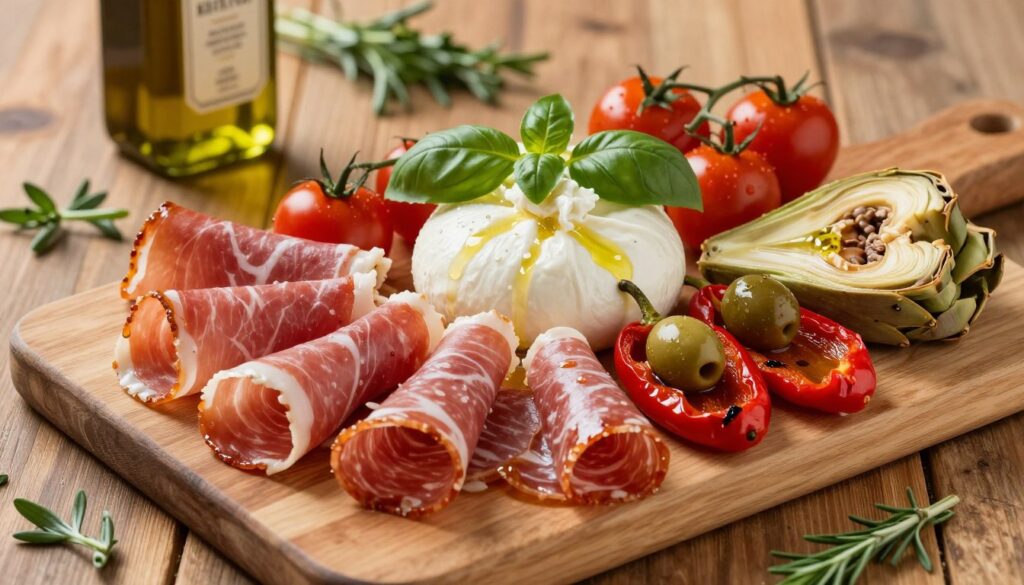
Start with a variety of cured meats like prosciutto and salami. These meats provide a salty, savoury foundation that is essential for any antipasto board. Pair these with a selection of cheeses, including both hard Italian varieties and softer options. This balance of textures keeps the palate engaged.
Don’t forget about marinated vegetables such as artichoke hearts and roasted red peppers. They add a tangy, acidic element that beautifully contrasts the richness of the meats. Additionally, sun-dried tomatoes can introduce a vibrant pop of colour and sweetness to your platter.
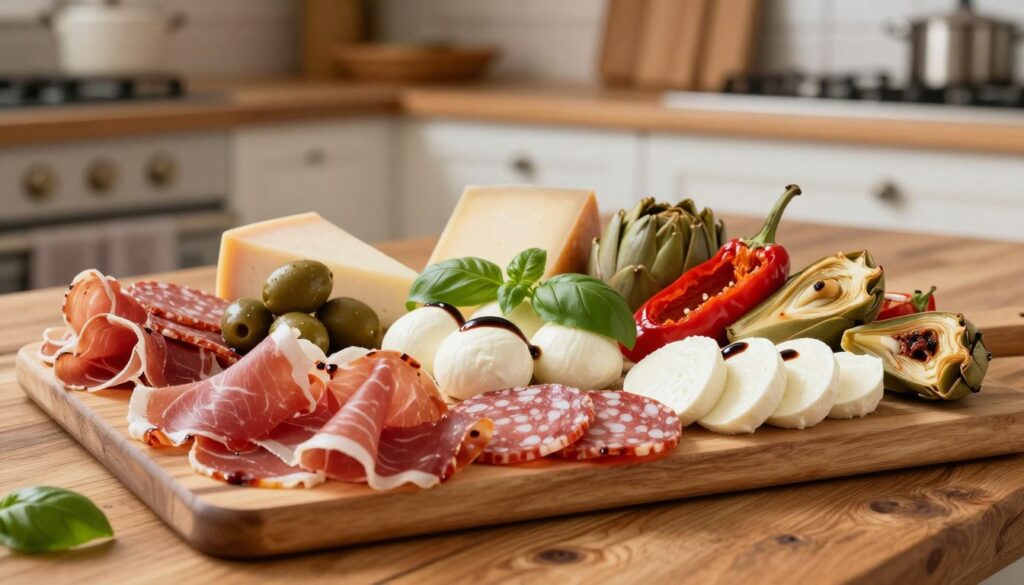
Completing your board, include crusty bread and olives. The bread serves as a perfect vessel for dips and olive oil, while olives contribute a briny flavour that stimulates the appetite. Remember, the variety of ingredients you choose should create a cohesive and delicious experience.
How to Build the Perfect Italian Sharing Board
Building the ideal Italian sharing board is an art that combines flavour and presentation. Selecting fresh, high-quality ingredients is essential to ensure your antipasto platter stands out. Start with a variety of cured meats like prosciutto and salami. These meats add depth and richness to your board.
Next, incorporate a selection of cheeses. Aim for a mix of hard Italian varieties and softer options like mozzarella. This balance creates a delightful contrast in texture.
Don’t forget to include vegetables such as artichoke hearts and roasted red peppers. These add a vibrant touch and a tangy flavour that complements the meats. Use a bowl for moist ingredients like olives to keep the rest of the board fresh.
To enhance your presentation, consider the following:
| Ingredient Type | Suggestions | Pairing Tips |
|---|---|---|
| Cured Meats | Prosciutto, Salami | Pair with hard cheeses |
| Cheeses | Parmesan, Mozzarella | Best with crackers |
| Vegetables | Artichoke Hearts, Roasted Red Peppers | Mix with olives |
| Breads | Ciabatta, Focaccia | Serve with olive oil |
Arranging your board artistically will make it more inviting. Remember, a well-prepared antipasto platter is a celebration of flavours and textures that brings everyone together.
Customising Your Antipasto Board for Diverse Tastes
Customising your antipasto board allows you to cater to various dietary preferences. This ensures that all guests feel included and can enjoy the delightful flavours of Italy.
For those seeking vegetarian or vegan options, consider these alternatives:
- Vegan Food and Living offers numerous homemade vegan cheese recipes, ideal for a plant-based antipasto platter.
- When hosting a dinner party, substitute cured meats with high-quality vegetarian alternatives.
- Include roasted red peppers, sun-dried tomatoes, and marinated vegetables for a flavourful vegan board.
- Making your own vegan salami or purchasing it from a supermarket can maintain the traditional feel.
- Using a bowl for hummus or other vegan dips adds depth without relying on dairy-based cheese.
- Even without traditional meats, focus on the textures of artichoke hearts, olives, and fresh bread.
- Preparing a vegan antipasto platter is quick, especially with store-bought ingredients like crackers and olive oil.
- Explore online for inspiration on combinations that satisfy both meat-eaters and plant-based guests.
- Ensure that hard Italian cheese alternatives are rennet-free for strict vegetarians.
- Customising your board is the best way to ensure that every guest can enjoy delicious flavours.
Arranging and Presenting Your Antipasto Platter
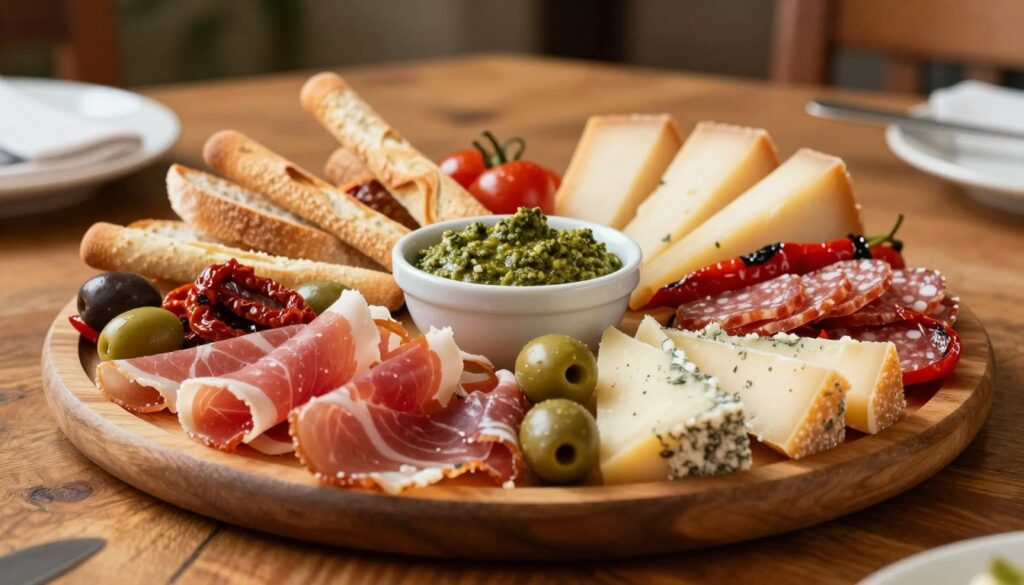
Creating a visually appealing antipasto platter is just as important as the ingredients you choose. The way you arrange your board can elevate the dining experience, inviting guests to indulge and share. Start by placing a bowl at the centre of your board. This anchors your layout and provides a dedicated space for messy items like olives or dips.
To avoid a soggy appearance, keep moist ingredients such as mozzarella or marinated vegetables in their own bowl. This simple trick ensures that your antipasto platter remains fresh and appealing throughout the meal.
Arranging complementary foods together makes it easier for guests to create perfect bites. For example, place prosciutto next to melon or cheese next to crackers. This not only enhances flavour combinations but also adds to the visual appeal.
A well-designed platter should be the centrepiece of your dinner party table, encouraging guests to gather around and share before the main course. Varying the shape, size, and colour of your ingredients adds visual interest and ensures that your platter looks professional and appetising.
| Serving Technique | Description | Benefits |
|---|---|---|
| Use a Bowl | Anchor the layout with a bowl for dips. | Prevents mess and keeps items organised. |
| Keep Ingredients Separate | Store moist items in bowls. | Avoids sogginess on the board. |
| Artistic Arrangement | Drape cured meats and arrange cheeses. | Enhances presentation and sophistication. |
| Vary Shapes and Colours | Include a mix of ingredient types. | Creates visual interest and appeal. |
By following these tips, you can create an enticing antipasto platter that not only looks great but also stimulates the appetite of your guests.
Antipasto Pairings: Enhancing Flavours with Wine and Dips
To elevate your antipasto experience, pairing it with the right wine and dips is essential. The right wine can complement the flavours of your platter, creating a harmonious balance that enhances each bite. For instance, a crisp white or a light red can cut through the richness of salty cured meats, making every mouthful more enjoyable.
When it comes to dips, consider adding whipped ricotta or roasted garlic spreads. These additions not only provide extra depth but also invite your guests to explore different flavour combinations. A well-chosen dip can transform your antipasto into a truly memorable starter.
As you select wine, think about the regional origins of your ingredients. This thoughtful approach can lead to a more authentic and cohesive flavour profile. Ultimately, the goal of these pairings is to enhance the natural flavours of the antipasto, ensuring that every bite is as delicious as the last.
By carefully choosing your dips and wines, you can turn a simple antipasto into a sophisticated starter that perfectly precedes your main course.
Conclusion
Creating the perfect antipasto is a blend of quality ingredients, thoughtful arrangement, and a love for sharing food. We hope this guide inspires you to craft stunning antipasti boards for your next gathering.
The essence of antipasti lies in the joy of bringing people together to enjoy simple, authentic flavours. Whether you include cured meats, cheeses, or vegan options, the care you put into your selection is what truly matters.
Don’t hesitate to experiment with different combinations to find your unique style in preparing these traditional Italian appetisers. We encourage you to delve deeper into Italy’s rich culinary traditions as you refine your skills in creating the ideal sharing board.