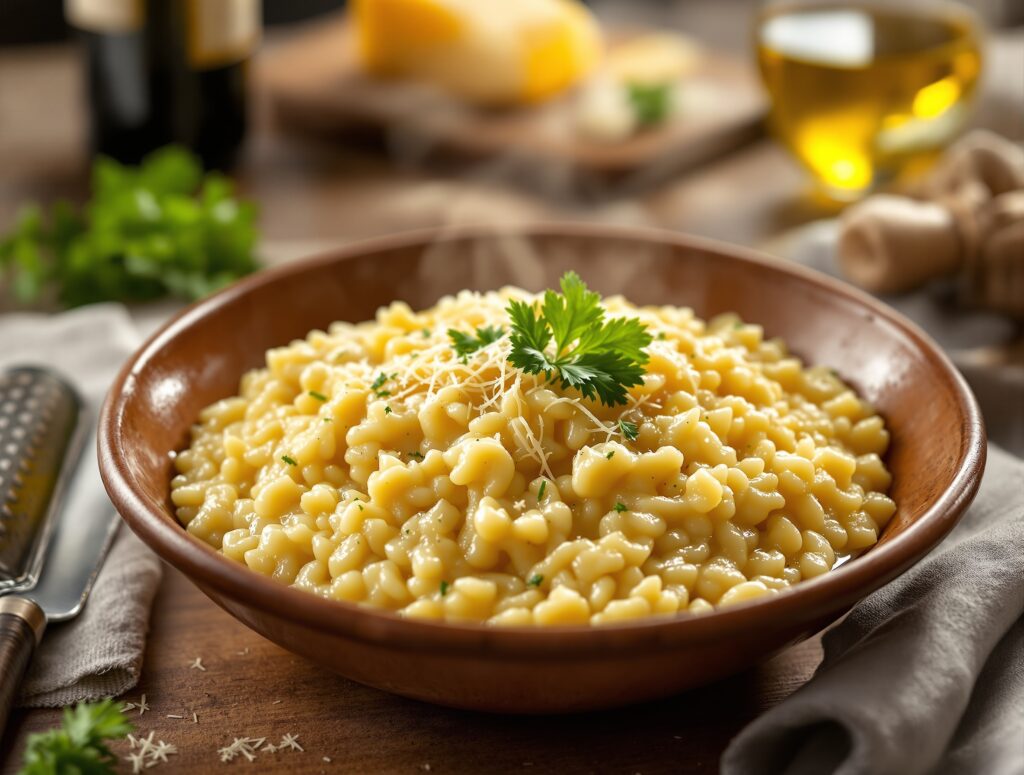
Arborio rice plays a vital role in Italian cuisine, serving as the cornerstone of risotto. Its high starch content is essential for creating the creamy consistency that defines this cherished dish. Named after the town of Arborio in Italy’s Po Valley, this medium-grain rice has been cultivated for generations and holds a prominent place in traditional recipes.
What sets Arborio rice apart is its remarkable ability to soak up liquids and absorb flavors while maintaining a firm bite. This makes it an ideal partner for ingredients like:
- saffron,
- mushrooms,
- seafood,
- vegetables.
Beyond risotto, its adaptability shines in desserts such as rice pudding or inventive dishes like arancini (crispy fried rice balls) and stuffed tomatoes.
In Italian cooking, where every detail matters, Arborio rice’s high amylopectin content guarantees richness and a satisfying texture in every bite. It’s a perfect example of how simple ingredients can create sophisticated culinary experiences when used with care and expertise.
What Is Italian Risotto Rice (Arborio)?
Italian Risotto Rice, often referred to as Arborio rice, originates from the fertile Po Valley in Italy. Recognizable by its short, plump grains, this variety is rich in amylopectin—a starch that imparts risotto with its velvety, creamy texture. Thanks to this characteristic, the rice absorbs liquids and flavors beautifully while maintaining a pleasantly firm bite.
Named after the northern Italian town of Arborio, this rice is synonymous with risotto, one of Italy’s most beloved culinary creations. Its high starch content ensures that as it cooks, the grains release just enough creaminess into the dish to achieve that signature smoothness. While risotto remains its most famous application, Arborio rice also excels in:
- desserts like rice pudding,
- savory recipes such as arancini,
- stuffed vegetables.
What sets Arborio apart is its perfect blend of creaminess and structure—qualities that make it indispensable in Italian cuisine. These unique traits elevate simple ingredients into refined dishes and cement its status as an essential choice for traditional Italian cooking.
The Origins of Arborio Rice in Italian Cuisine
Arborio rice originates from the Po Valley in northern Italy, a region renowned for its fertile soil and ideal farming conditions. This particular variety takes its name from the town of Arborio in Piedmont and has been a cornerstone of Italian agriculture and cuisine for centuries. Its prominence in Italian cooking dates back to the Renaissance, when innovative irrigation transformed the Po Valley into a prime area for rice cultivation.
Known for its short, plump grains, Arborio rice is celebrated for its ability to create a creamy consistency while absorbing flavors beautifully. It plays a central role in iconic dishes like risotto, which exemplifies the harmony of simple ingredients and expert craftsmanship—a hallmark of Italian gastronomy. Even now, Arborio remains nearly synonymous with risotto, highlighting Italy’s rich regional traditions through recipes that incorporate local treasures such as Lombardy’s saffron or fresh seafood from coastal regions.
Understanding the Unique Characteristics of Arborio Rice
Arborio rice is known for its short, plump grains that are rich in amylopectin—a starch responsible for the creamy texture that defines risotto. As it cooks, this starch is released, creating a luxurious consistency while allowing the rice to absorb liquids and flavors effortlessly. Despite its creamy quality, Arborio maintains a pleasantly firm core, striking an ideal balance of textures perfect for dishes like risotto.
Its structure makes Arborio exceptionally absorbent, allowing it to take on the flavors of broths and ingredients like saffron, mushrooms, or seafood with ease. Beyond risotto, it also excels in recipes such as:
- arancini,
- savory dishes like stuffed vegetables,
- sweet treats like rice pudding.
What truly sets Arborio apart is its unique combination of creaminess and firmness. The high amylopectin content ensures each grain contributes to a cohesive yet textured dish, making it an essential ingredient in Italian cooking.
Why Arborio Rice Is the Classic Choice for Risotto
Arborio rice is the preferred choice for crafting risotto, cherished for its ability to create a luxuriously creamy texture—an essential hallmark of this beloved Italian dish. Its high starch content, particularly amylopectin, is key to achieving the smooth consistency that defines risotto. As you gently stir it during cooking, the rice releases starch into the broth, forming a velvety sauce that clings beautifully to each grain.
This medium-grain variety also excels at soaking up flavors from ingredients like broth, white wine, or saffron. Despite its rich creaminess, Arborio retains a subtle firmness in its center—a crucial element for achieving risotto’s iconic al dente bite. This harmonious blend of creaminess and structure distinguishes Arborio from other types of rice.
Its accessibility and simplicity make it a favorite among both home cooks and seasoned chefs alike. Whether you’re whipping up Risotto Milanese or a hearty mushroom risotto, Arborio remains an indispensable staple for creating authentic Italian flavors.
The Role of High Starch Content in Creamy Risotto
Arborio rice owes its creamy magic to its high starch content, which plays a key role in risotto’s rich texture. As the rice cooks, it releases amylopectin—a type of starch that melds beautifully with the broth. This process forms a velvety sauce that clings perfectly to each grain.
- the gradual absorption of liquid during cooking allows the starch to release steadily,
- this creates risotto’s iconic consistency without relying on cream,
- natural silkiness enhances risotto’s indulgent appeal.
Arborio rice is indispensable for this timeless Italian dish. With its starchy nature and precise cooking methods, simple ingredients are elevated into a decadent culinary experience.
How Arborio Rice Absorbs Flavors and Liquids
Arborio rice stands out for its ability to soak up flavors and liquids, thanks to its high starch content and distinctive grain structure. As it cooks, it releases amylopectin—a type of starch that naturally thickens the surrounding liquid—creating a creamy consistency. This trait allows it to absorb the essence of broths, wines, or other ingredients seamlessly. At the same time, it maintains a satisfying al dente texture, offering both firmness and rich flavor in every bite. These qualities make Arborio rice a perfect choice for dishes like risotto, where melding diverse ingredients into a cohesive and flavorful dish is key.
How Arborio Rice Compares to Other Italian Rice Varieties
Arborio rice stands out as one of Italy’s most renowned varieties, setting itself apart from others like Carnaroli and Vialone Nano. Praised for its creamy texture and excellent ability to soak up flavors, Arborio has become a favorite in many kitchens. However, chefs often lean toward Carnaroli, which boasts higher starch content and better resistance to overcooking. These qualities make it the go-to option for achieving perfectly firm grains in risottos.
On the other hand, Vialone Nano is characterized by its smaller grains and quick absorption of flavors. This makes it ideal for lighter risottos or dishes where subtle, delicate tastes take the spotlight. Despite these distinctions, Arborio remains a popular choice among home cooks because it’s easy to find and forgiving to work with. Its ability to deliver creamy results without requiring advanced techniques makes it perfect for everyday recipes.
Each variety brings something unique to the table:
- carnaroli offers exceptional quality with less risk of mishaps during cooking,
- vialone Nano shines when quick preparation and nuanced flavor are key,
- arborio strikes a balance between creaminess and simplicity.
Ultimately, the best choice depends on your recipe’s requirements and personal preferences.
Tips for Selecting and Storing Arborio Rice
When selecting Arborio rice, look for plump, uniform grains without any broken pieces. Whenever possible, opt for premium options like organic or non-GMO varieties. These choices not only soak up flavors and liquids better but also provide the creamy texture essential for dishes such as risotto.
To keep Arborio rice in top condition:
- store it in an airtight container to protect it from moisture and pests,
- place the container in a cool, dry spot away from sunlight,
- use the rice within a year of buying it for the freshest taste and best cooking results.
By taking these steps, you’ll maintain the unique qualities of Arborio rice, making it ideal for risottos or any recipe that calls for a rich, creamy texture.
Cooking Techniques for Perfect Arborio Rice
To achieve perfectly cooked Arborio rice, opt for a wide, heavy-bottomed pan to ensure even cooking and prevent any hot spots.
- begin by gently sautéing finely chopped onions in butter or olive oil until they become translucent,
- then stir in the Arborio rice, allowing it to toast lightly,
- this step deepens its nutty flavor and primes the grains to soak up liquid effectively.
Gradually incorporate warm broth into the rice, adding one ladleful at a time. Allow each addition to fully absorb before pouring in more. Regular stirring is key—it helps release amylopectin, the starch responsible for risotto’s signature creamy texture. Use a wooden spoon to stir consistently yet gently, ensuring nothing sticks to the bottom of your pan.
- keep the broth warm throughout the process,
- maintaining its temperature aids proper absorption and cooks the rice evenly,
- for an extra layer of flavor, consider adding white wine immediately after toasting the rice but before introducing the broth.
Cook over medium heat until the grains reach an al dente consistency—soft with just a hint of firmness in their centers—usually taking around 18–20 minutes. To finish your dish with richness and creaminess, especially if you’re making risotto, stir in some butter or grated Parmesan cheese as a final touch.
- avoid rinsing Arborio rice prior to cooking,
- washing away its natural starch will compromise that velvety texture you’re aiming for,
- following these straightforward steps with care will turn Arborio rice into a delicious Italian-inspired dish brimming with authenticity and tradition.
Classic Risotto Recipes Featuring Arborio Rice
Arborio rice is the star ingredient in classic risotto recipes, celebrated for its ability to soak up flavors and deliver a luscious, creamy texture.
- risotto milanese incorporates saffron for its vibrant golden hue and delicate floral undertones,
- mushroom risotto showcases sautéed mushrooms that bring an earthy depth to the table,
- arborio rice complements both subtle and robust ingredients effortlessly.
Rooted deeply in Italian culinary heritage, Risotto Milanese is often paired with ossobuco, making it a sophisticated choice for special occasions. The saffron not only intensifies its flavor but also lends a touch of elegance with its striking color. In contrast, Mushroom Risotto offers a more comforting experience, blending broth-infused mushrooms with Arborio rice to create a dish rich in umami.
A crucial technique shared by both recipes is gradually adding warm broth while continuously stirring—a method essential for achieving risotto’s signature creaminess. Enhancements like white wine or Parmesan cheese can elevate the flavors even further. Whether you’re preparing an elegant feast or simply craving something cozy and satisfying, Arborio rice remains indispensable in crafting authentic risottos that delight every time.