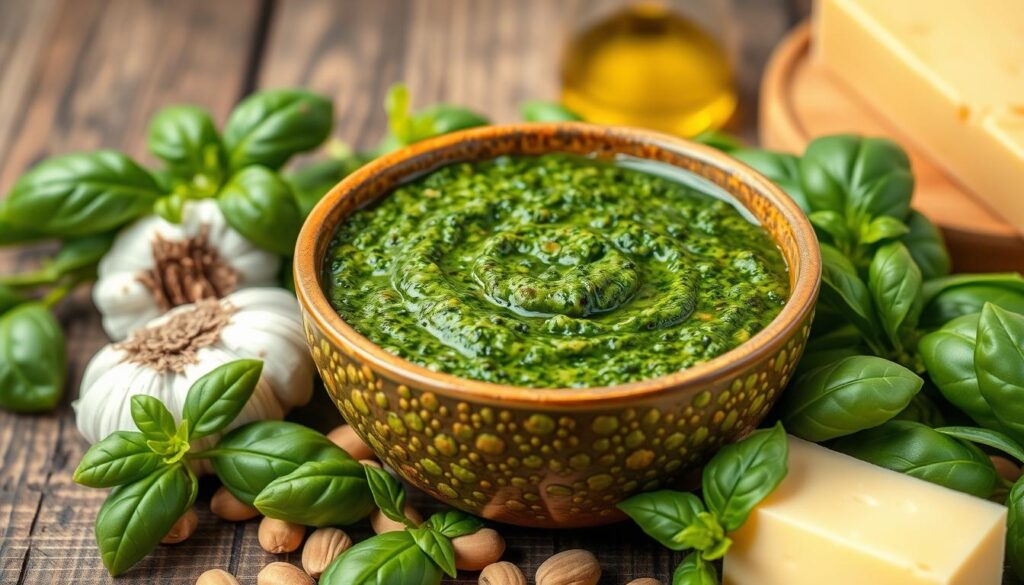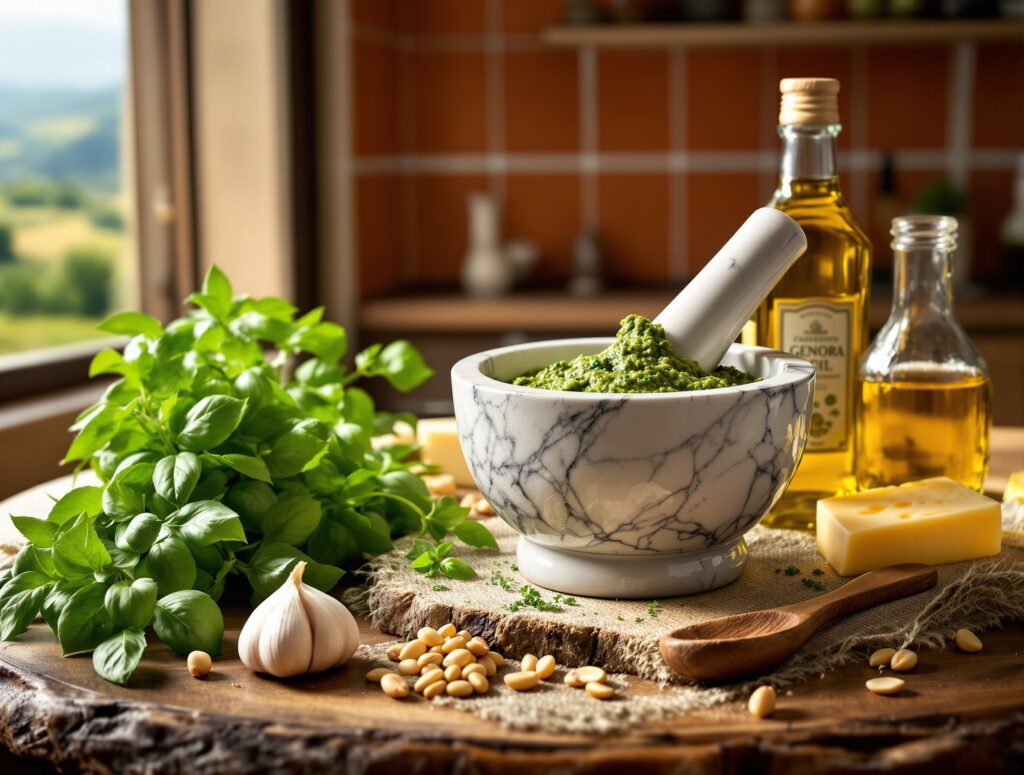
Italian Pesto from Genoa, famously known as Pesto Genovese, is a staple of Ligurian cuisine and a beloved symbol of Italian gastronomy. This classic sauce originates from Genoa and features a handful of simple yet high-quality ingredients that capture the spirit of the region:
- fragrant Genovese basil,
- rich extra virgin olive oil,
- Parmesan cheese,
- pecorino sardo,
- pine nuts,
- garlic.
The name “pesto” derives from the Genoese word “pestâ,” meaning to crush or pound—a reference to its traditional preparation with a mortar and pestle.
Deeply tied to Liguria’s cultural traditions, this cherished recipe showcases the area’s dedication to genuine flavors. Its vibrant green hue and enticing aroma make it a favorite pasta companion, though its versatility has inspired countless other culinary uses worldwide. The harmonious blend of basil’s fresh herbal notes, the nuttiness of pine nuts, and the savory depth of cheeses continues to captivate food enthusiasts across the globe.
The Origins of Pesto and Its Connection to Genoa
The origins of pesto can be traced to Genoa, a city in Italy’s Ligurian region known for its rich culinary heritage. Its precursor, moretum, was a paste created by the ancient Romans using herbs, cheese, and garlic—a simple yet flavorful combination that laid the foundation for what we now recognize as pesto.
The evolution toward the modern version began in the 19th century when basil took center stage in recipes. This marked a shift from earlier herb-based sauces and brought a fresh identity to the dish. Genoa’s bustling maritime trade played a key role in shaping pesto’s unique flavor profile by introducing pine nuts and Parmesan cheese—both essential ingredients.
The name “pesto” originates from “pestâ,” a word in the Genoese dialect meaning “to pound” or “crush.” Traditionally made with a mortar and pestle, this technique not only blends the ingredients seamlessly but also reflects Liguria’s dedication to preserving authentic culinary practices.
Pesto is far more than just a popular Ligurian dish—it embodies cultural pride and serves as a testament to Genoa’s history and distinct landscape. Its enduring popularity highlights its dual role as both a traditional recipe and an innovative contribution to Italian cuisine.
What Makes Pesto Genovese Unique?
Pesto Genovese is famous for its distinct flavor, achieved through the use of carefully selected ingredients and a preparation method steeped in tradition. At its heart lies Genovese basil, prized for its unmistakable aroma and taste that no other variety can match. This fragrant herb is combined with velvety extra virgin olive oil, Parmesan cheese, and pecorino sardo, resulting in a harmonious blend of creaminess and tanginess.
What truly distinguishes Pesto Genovese is the way it’s made. Traditionally, a marble mortar and wooden pestle are used to gently crush the ingredients rather than relying on mechanical blenders. This time-honored technique not only preserves the sauce’s vibrant green hue but also releases the basil’s essential oils, ensuring a silky texture while highlighting each component’s natural flavor.
The word “pestâ,” meaning “to pound” in Genoese dialect, embodies Liguria’s devotion to preserving authentic culinary traditions over generations. Unlike modern variations that may incorporate shortcuts or alternative ingredients, Pesto Genovese remains faithful to its roots by adhering strictly to classic methods and high-quality standards. Its dedication to authenticity has made it a beloved symbol of Ligurian cuisine celebrated around the globe.
Traditional Ingredients of Pesto Genovese
Pesto Genovese stands out for its simplicity and authenticity, crafted from a harmonious mix of six traditional ingredients. At the core is fresh Genovese basil, which lends its unmistakable aroma and distinct flavor to this classic sauce. Smooth extra virgin olive oil complements it with subtle fruity notes.
The recipe pairs two cheeses to achieve a creamy consistency with a touch of tang:
- parmesan (or Grana Padano),
- pecorino sardo.
Pine nuts add richness and a nutty depth, while garlic introduces a bold sharpness that perfectly balances the other flavors. A dash of salt ties everything together seamlessly.
Using top-quality ingredients is key to preserving the true character of Pesto Genovese. Each component contributes to its vibrant green hue, fragrant complexity, and well-rounded taste—trademarks of this cherished Italian favorite.
The Role of Genovese Basil in Authentic Pesto
Genovese basil plays a key role in capturing the authentic flavor and fragrance of Pesto Genovese. Known locally as “basilico genovese DOP,” this variety is easily recognized by its vibrant green leaves and sweet, aromatic taste. Unlike other basil types, it boasts a distinct character that brings the sauce to life.
Traditionally, the leaves are:
- crushed with garlic and pine nuts in a mortar,
- a process that releases their essential oils,
- enhancing their fresh aroma and creating a velvety texture.
This unique basil is what gives Pesto Genovese its signature flavor, making it an irreplaceable component of this beloved Italian dish.
Protected Designation of Origin (PDO) and Genovese Basil
Genovese basil holds the prestigious Protected Designation of Origin (PDO) status, signifying that it is cultivated exclusively in select regions of Genoa under stringent quality standards. This certification guarantees the genuine nature and exceptional quality of “basilico di Pra”, celebrated for its fragrant aroma and delicate sweetness.
Thanks to this designation:
- only basil grown in these specific areas can bear the name,
- it safeguards its cultural heritage and culinary significance,
- it plays a key role in maintaining the authenticity of Pesto Genovese,
- it supports traditional farming methods,
- it encourages sustainable agriculture within Liguria’s unique microclimate.
How to Make Pesto Genovese Using a Mortar and Pestle
To make Pesto Genovese the traditional way, follow these steps:
- place peeled garlic cloves and pine nuts in a mortar,
- crush them with circular motions until they form a smooth, creamy paste,
- add fresh, well-dried Genovese basil leaves along with a pinch of coarse salt,
- gently grind the mixture to release the basil’s fragrant oils while keeping its vibrant green hue,
- incorporate grated Parmesan cheese and pecorino sardo, mixing thoroughly to achieve a harmonious blend of flavors,
- slowly drizzle high-quality extra virgin olive oil into the mixture, a little at a time, stirring continuously until the pesto reaches the perfect texture for your taste.
The final result is an aromatic sauce bursting with the authentic essence of Liguria. This age-old method brings out each ingredient’s unique flavor and produces a fresher taste compared to modern blending tools.
Serve it immediately over pasta or preserve it by covering the surface with olive oil to maintain its freshness for later use.
Common Pasta Pairings for Pesto Genovese
Pesto Genovese shines brightest when paired with pasta types that highlight its creamy consistency and bold taste. Traditionally, it goes hand in hand with trofie, a short, twisted Ligurian pasta that effortlessly clings to the sauce. Another timeless match is trenette, a narrow ribbon-like pasta resembling linguine, often linked to Pasta alla Genovese. Both options underscore pesto’s deep roots in Ligurian culinary traditions.
- spaghetti and linguine also make excellent companions,
- their long strands are perfect for evenly coating the velvety sauce, delivering a balanced bite every time,
- fettuccine offers another great alternative; its broad surface holds onto the rich flavors of pesto beautifully,
- for something unique, gnocchi presents an irresistible choice—the tender potato dumplings meld seamlessly with the fragrant sauce.
For optimal results, always cook your pasta al dente. This guarantees the ideal texture and ensures the pesto adheres perfectly without overpowering its fresh ingredients.
Classic Dishes Featuring Pesto Genovese
Classic recipes featuring Pesto Genovese truly bring out its vibrant green hue and rich, fragrant taste. One standout dish is trofie al pesto, where twisted pasta clings to the creamy sauce, ensuring every mouthful is packed with its herbal and nutty flavors. Another cherished favorite is trenette al pesto, a ribbon-like pasta often paired with potatoes and green beans to create a delightful balance of textures and flavors.
The combination of trenette, potatoes, and green beans exemplifies how simple ingredients can elevate a meal while perfectly complementing the bold essence of Pesto alla Genovese. These dishes are traditionally topped with:
- grated Parmesan,
- a handful of pine nuts,
- fresh herbs for added depth and crunch.
They remain icons of Italian cuisine, celebrated not only for their authenticity but also for their ability to honor regional culinary traditions.
The Aromatic Flavor and Balance of Pesto Genovese
Pesto Genovese is celebrated for its distinctive aroma, crafted from a blend of carefully chosen ingredients. At its heart is fresh Genovese basil, delivering bright and sweet herbal flavors. Garlic introduces a bold, tangy edge, while high-quality extra virgin olive oil brings everything together with its smooth and fruity undertones.
What makes Pesto Genovese truly special is the harmony of its flavors:
- creamy pine nuts mellow out the sharpness,
- parmesan and pecorino sardo cheeses contribute a savory depth without overpowering the basil’s freshness,
- meticulous balance ensures every spoonful is both rich and perfectly cohesive.
The result? A vibrant green sauce bursting with fragrance that elevates any dish it graces. Whether mixed into pasta or spread on bread, Pesto Genovese’s exquisite flavor and timeless appeal make it a cornerstone of Italian culinary tradition.