The “best” olive oil isn’t a country. It’s the right varietal and harvest style for how you cook.
If you want a peppery bite and potentially higher polyphenols, early-harvest Greek Koroneiki is often described as robust and high in phenolics. Exact polyphenol levels (reported in mg/kg) vary widely by harvest timing, year, milling, and storage, and should be verified via a producer COA (certificate of analysis) using a stated method (commonly HPLC or Folin–Ciocalteu).
Italian Frantoio often reads grassy and aromatic, while Spanish Picual is prized for structure and stability—traits that can make it a steady pick for everyday cooking. These profiles are producer- and harvest-dependent, not guaranteed by country.
That’s more than it seems.
Freshness, production choices, and label details often decide whether a bottle matches your taste and your kitchen.
Which Olive Oil Is Best: Italian, Spanish, or Greek?
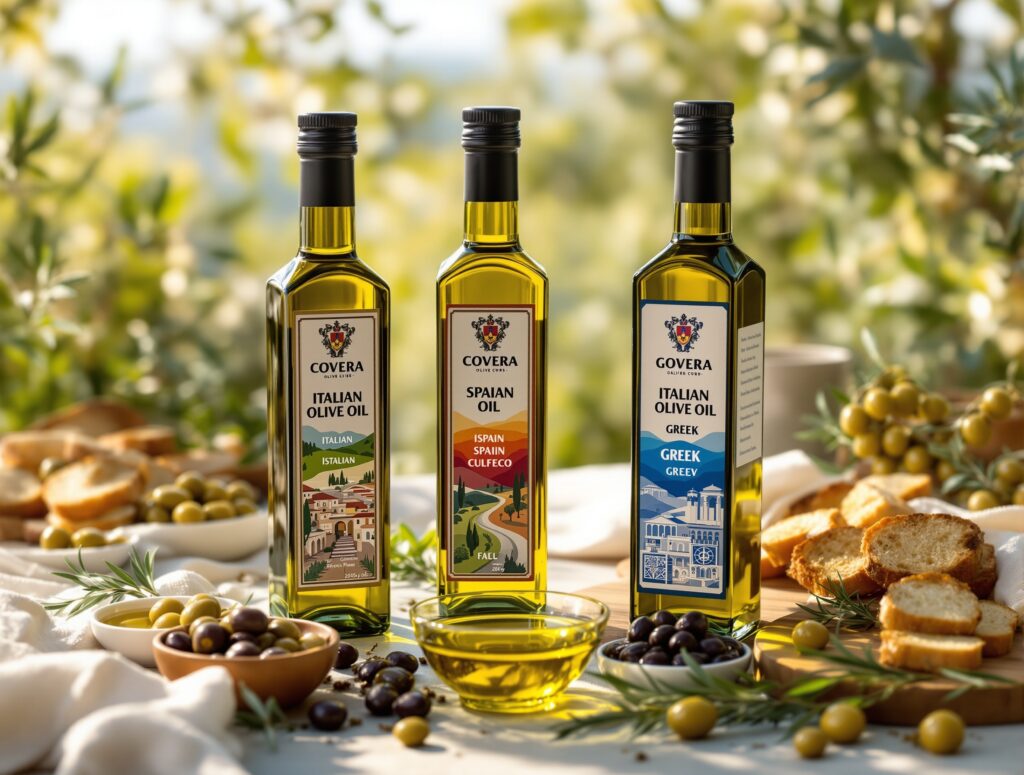
Pick olive oil the way you pick a tool: match it to the job. Some Greek EVOO is made in a bold, high-phenolic style; many Italian olive oils aim for balance; and many Spanish olive oils are produced in styles that work well for daily use. Extra Virgin Olive Oil (EVOO) is the top grade, yet origin, varietal, and freshness can matter more than the flag on the label.
Greek oils are often described as bitter and peppery, and that edge can feel loud on the palate. Italian oils are frequently blended for a smoother, fruit-forward profile, while Spanish oils are made across a wide range—from delicate to very robust—depending on cultivar, harvest timing, and producer goals.
It depends on your meal. Your tongue will tell you.
Where does this difference come from?
Cultivar choice, harvest timing, and the producer’s target style usually explain it.
Key Differences In Flavor And Quality
Koroneiki, a Greek olive variety, often produces intensely aromatic oil with a peppery finish, especially when the fruit is picked early. Many Italian blends chase harmony—fruit, grass, and a gentle bite—while many Spanish styles range from softer and rounder to intensely green and pungent, depending on cultivar (such as Picual) and harvest choices.
How Polyphenol Levels Affect Health Benefits
Polyphenols are antioxidant compounds in olive oil that contribute to bitterness and the throat “sting.” Polyphenol content can be reported in mg/kg, but values vary by measurement method, harvest year, milling, and storage; treat any number as bottle-specific and best confirmed by a COA.
Typical Uses For Each Olive Oil Type
- Greek EVOO: finishing oil for salads, legumes, grilled vegetables, and bread dipping (especially when you like a peppery bite).
- Italian olive oil: pasta, soups, and sautéing when you want balance without overpowering aromatics.
- Spanish olive oil: everyday cooking, roasting, and larger-batch meals; choose a style (mild to robust) that fits the dish.
But there’s a catch.
Intensity, balance, and versatility are real, but freshness decides whether any of them show up in the pan.
How Production Methods Influence Olive Oil Quality In Italy, Spain, And Greece
How the olives are handled shapes the oil: it influences oxidation risk, phenolic retention, and how loud the flavors land. Production models vary within each country: you’ll find small estates and large industrial producers in Greece, Spain, and Italy, and quality can be excellent (or mediocre) in any of them.
Speed matters at the mill. Temperature matters too.
Imagine the same olives handled two different ways.
A few hours of delay—or rough handling—can change the taste more than the country name ever will.
Harvesting Techniques Used In Each Country
Greece is often linked with family estates and hand-harvesting, which can limit bruising when the fruit is treated gently. Spain is widely associated with large-scale mechanical harvesting, while Italy’s harvest timing and cultivar mix shift by region and producer. In all three countries, both hand and mechanical methods can produce high-quality oil when fruit is healthy and milling is prompt.
How Processing Methods Differ
Meticulous, fast milling helps protect freshness because damaged olives start oxidizing soon after picking. Some early-harvest oils are made specifically to emphasize bitterness/pepperiness and higher phenolic intensity, while other oils are made for a softer profile. If a producer claims a polyphenol number (mg/kg), look for a dated lab report/COA and the method used.
Terroir And Varietals: Why They Matter
Koroneiki (Greece) is a small-fruited variety and can produce concentrated, pungent oils, especially when harvested early. Yield per tree and oil content vary widely with orchard management, irrigation, climate, and harvest timing, so avoid treating any single set of numbers as universal. Italy’s Frantoio, Moraiolo, and Coratina are often used alone or combined to tune bitterness, aroma, and balance.
| Country focus | Common approach | Typical outcome |
|---|---|---|
| Greece | Often estate production; sometimes early harvest | Can be higher-phenolic, sharper bite |
| Spain | Often large-scale production; broad style range | Can be consistent supply; mild to robust profiles |
| Italy | Varietal diversity; frequent blending | Often balanced, aromatic styles |
And that changes everything.
Gentle harvest handling plus fast milling—often within the same day—can raise the odds the bottle tastes fresh and shows the intensity people expect from top-tier EVOO.
Health Benefits Of Greek, Italian, And Spanish Extra Virgin Olive Oils
Greek, Italian, and Spanish extra virgin olive oils are associated in research with heart-health and inflammation-related benefits when used as part of an overall healthy dietary pattern. The practical differences between bottles often come down to phenolic content, freshness, and how much you actually use.
Think of EVOO as minimally processed olive juice. Higher-quality EVOO often retains more phenolics such as oleocanthal and hydroxytyrosol—and you can sometimes sense that as bitterness and throat pungency. Flavor can be a clue, but it isn’t a lab test.
Flavor is a clue. Freshness is the proof.
So what should you pay attention to first?
Start with what you taste and smell, then check freshness and labeling.
How Antioxidants And Polyphenols Contribute To Health
Polyphenols help protect fats from oxidation and are associated in studies with cardiometabolic and anti-inflammatory markers. Oleocanthal—an EVOO phenolic—contributes to the throat burn and has been studied for anti-inflammatory activity, but effects depend on dose, overall diet, and the specific oil’s composition.
What Research Suggests (And What It Doesn’t)
Many studies link extra virgin olive oil consumption—especially within Mediterranean-style eating patterns—with favorable health outcomes. Greek, Italian, and Spanish EVOOs can all fit this pattern; phenolic levels and freshness vary more by producer, harvest, and storage than by country alone.
How Olive Oil Composition Varies By Region
Frantoio (Italy) and Picual (Spain) can both produce oils ranging from relatively mild to very robust, and polyphenol levels can vary substantially by harvest timing, year, and processing. If you want to compare polyphenols across bottles, rely on a current COA (mg/kg) and note the test method.
In practice: more bitterness and pepperiness often (not always) aligns with higher phenolic intensity; rounder oils may read less pungent.
A quick checklist can help when choosing for health-focused phenolics:
- Prefer peppery, bitter oils over flat ones when higher phenolic intensity is the goal.
- Choose bottles with transparent testing (COA) if polyphenol numbers are important to you.
- Pick fresh, well-stored EVOO because phenolics decline with time and heat exposure.
Most people overthink the country and underthink the bottle.
If you’ll actually use it daily, you’re already ahead—fresh EVOO that tastes good is the one that earns a place on the counter.
How To Identify Authentic And High-Quality Olive Oil From Greece, Italy, And Spain
To spot authentic, high-quality olive oil from Greece, Italy, or Spain, focus on traceability (who grew it and where), protected-origin labeling, and transparent testing rather than country-of-origin marketing. A premium bottle should give you a verifiable chain from grove to mill to bottle—not just a romantic brand name.
Labels can mislead. Details can’t.
And here the problem starts.
Many front labels look traditional, yet the information that matters is missing.
Labels And Certifications That Support Authenticity
EU protected-origin marks and clear producer disclosure are solid starting points, along with bottler identity and lot details. “Estate bottled” can be a helpful signal when it’s backed by traceability and batch information, but it’s still worth checking for harvest date, lot number, and (when available) a COA.
How To Read And Understand PDO And PGI Protections
PDO (Protected Designation of Origin) ties production and processing to a defined place, while PGI (Protected Geographical Indication) links at least one key stage to the region. Look for the PDO/PGI name plus a specific place instead of a generic “Mediterranean” line.
Common Mistakes When Buying Olive Oil
- Assuming “Product of Italy” guarantees Italian olives; labeling rules can allow multi-country blends depending on how the product is categorized and labeled.
- Paying premium prices without proof of origin; prices vary widely by harvest conditions, packaging, and market, so look for estate/producer details and batch traceability rather than assuming price alone equals quality.
- Ignoring traceability fields such as harvest date, lot number, and bottler identity, which can matter more than a front-label flag.
Look for the boring details—they’re the useful ones.
Would you buy wine with no vintage? Treat EVOO the same: when protected origin, clear bottling responsibility, and traceable batch details show up together, your odds of getting fresh, authentic EVOO jump.
What “Low Acidity” Means (And How To Verify It)
“Acidity” in EVOO usually refers to free acidity (a lab-measured value expressed as % oleic acid), not the sour taste you might associate with acidic foods. Consumers generally can’t confirm free acidity by taste alone; if it matters to you, look for a recent COA from the producer or importer. On-label, you can more reliably check harvest date (or best-by), lot number, storage guidance, and whether the producer provides test results on request.