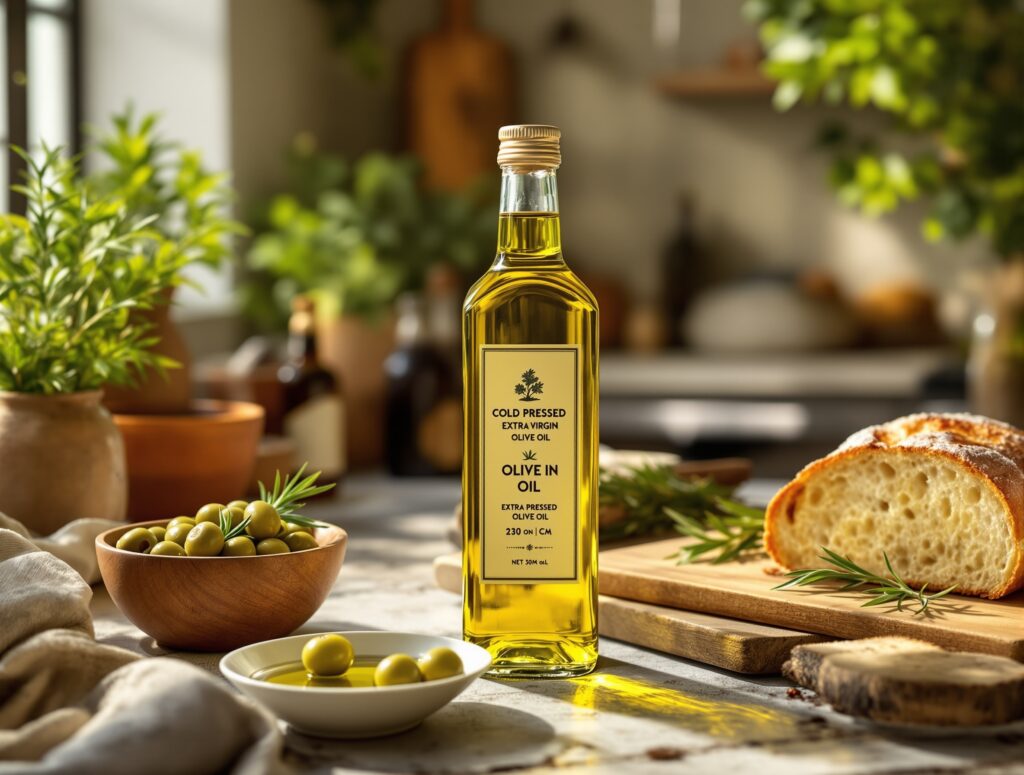
“Cold-pressed” on an olive oil label isn’t a promise of top quality; it’s a hint about the extraction method and what the oil may keep.
Cold pressing is an older extraction approach that keeps heat low, which can help preserve aromas, flavors, and naturally occurring compounds like polyphenols and tocopherols.
This guide breaks down what cold-pressed really means, how it differs from refined oils, and which buying, cooking, and storage habits protect the taste and value you’re paying for.
Consumption benefits and usage of cold-pressed olive oil
Cold-pressed olive oil often tastes brighter and more fruit-forward, and it may carry more of the antioxidants found in olives. Limiting heat during extraction can help preserve compounds that harsher processing can reduce.
Small details matter here. Aroma tells you fast. Those same compounds often show up first in the smell and the finish.
What Are the Health Benefits of Consuming Cold-Pressed Olive Oil?
Cold pressing—an older olive oil extraction method—aims to limit heat and processing so antioxidants such as polyphenols and tocopherols are less likely to break down. Diets that include olive oil (especially less-processed oils) are associated with cardiovascular support and lower markers of oxidative stress, though results vary by overall diet and lifestyle.
Extra virgin olive oil is a separate label tied to chemical and sensory standards, while “cold-pressed” points more narrowly to temperature control during extraction. They are not synonyms, and “cold-pressed” does not automatically mean extra virgin. In many markets, “cold-pressed” is not a tightly regulated quality grade, so it’s best treated as a descriptive term rather than a guarantee.
Many producers treat 27 °C (80 °F) as a practical ceiling during extraction—mainly to protect aroma, flavor, and heat-sensitive compounds.
Where does this difference come from? Heat and oxygen exposure during malaxation can shift what survives into the bottle.
How Can Cold-Pressed Olive Oil Be Used in Cooking and Daily Diet?
Use cold-pressed olive oil where its aroma can actually be noticed: dressings, dips, and finishing vegetables, beans, fish, and soups. If you cook with it, keep the heat gentler and consider adding some at the end to keep more flavor.
Many people overheat it. Flavor can vanish fast, especially if the oil is cooked hard for a long time.
- Daily use ideas: whisk into vinaigrettes, spoon over roasted vegetables, blend into hummus, or finish pasta and grains.
- Flavor pairing: peppery oils suit leafy greens; milder oils suit eggs, yogurt dips, and baking.
- Quality checklist: look for “cold pressed” plus a harvest/press date and packaging that limits oxygen and light exposure. Some producers use nitrogen.
Cold-pressed makes sense when you want strong sensory quality in meals you eat often.
But there’s a catch: the payoff shows up most when you handle the oil gently—especially around heat and air.
Health benefits of extra virgin olive oil
Extra virgin olive oil is often associated with heart and brain health in the context of overall dietary patterns, largely because it combines monounsaturated fats with naturally occurring antioxidants. Organic cold-pressed extra virgin olive oil is a common pick when freshness and a higher antioxidant profile are the goal, but “cold-pressed” and “extra virgin” still refer to different things.
Daily use changes the math. What are you really trying to get from the bottle?
How Does Extra Virgin Olive Oil Support Cardiovascular Health?
Extra virgin olive oil is a grade made without refining, and it tends to keep more of the olive’s natural aroma compounds and antioxidants. Monounsaturated fats can replace saturated fats in your diet, and polyphenols are linked to cardiovascular support through lower oxidative stress.
Refined olive oil (or “pure olive oil”) goes through processing that strips many natural compounds, while many extra virgin oils are made at tightly controlled low temperatures to help preserve them. Some studies suggest that adding extra virgin olive oil to carbohydrate-heavy meals may reduce post-meal blood sugar spikes, but the size of the effect depends on the study design, the meal, and the amount of oil used.
What Role Do Polyphenols Play in Brain Health?
Polyphenols are plant antioxidants in cold-pressed olive oil that may help lower oxidative stress, which is one reason olive-oil-rich eating patterns are studied for potential brain-health support. Vitamin E (a tocopherol) adds another layer of antioxidant defense alongside polyphenols.
Picture it as a buffer: when antioxidants stay intact, the oil—and the eating pattern around it—holds up better under stress.
| Oil type | Processing | Typical trade-off |
|---|---|---|
| Organic cold-pressed extra virgin olive oil | Low-temperature extraction (often described as ≤27 °C / 80 °F) | More aroma and antioxidants, more sensitive to heat and light |
| Virgin olive oil | Mechanical extraction | Good flavor, often less intense than top extra virgin |
| Refined olive oil / pure olive oil | Refining + blending | Milder taste, fewer natural antioxidants |
Extra virgin olive oil earns its reputation when careful processing helps keep the compounds that slow oxidation and support the body’s antioxidant defenses.
Part of the value sits in the bottle—and part depends on what you do with it at home.
Choosing olive oil for specific uses
Picking olive oil gets easier when you match grade and flavor intensity to the job: raw and finishing uses reward higher-quality oils, while high-heat or neutral-taste cooking can work with simpler options. Grades of olive oil are categories that hint at how the oil was made and what flavors or defects you might run into.
Be honest about the job. Flavor or just cooking fat? That question decides most purchases.
What Factors Should Be Considered When Selecting Olive Oil for Cooking?
Extra virgin is the highest common grade and has to meet chemical and sensory standards, including low oxidation and no sensory defects like rancidity or fustiness. Lower extraction temperatures often produce a more intense profile, which suits salads, dips, and finishing.
But there’s a catch: if the dish hides the oil, you can spend more without tasting the difference.
Per 1 tbsp (15 ml), nutrition is broadly similar across grades and is approximate (it can vary by product and serving size): about 120 calories, 14 g fat, and 1.9 g saturated fat, so the choice usually comes down to flavor, freshness, and how much heat the oil will face.
Macros won’t decide for you—your cooking method will.
- Best for raw/finishing: extra virgin with a bold aroma.
- Best for everyday sautéing: a fresh extra virgin that suits the dish.
- Best for neutral flavor: lighter-tasting oils where aroma is not the goal.
How Does Cold-Pressed Olive Oil Compare to Refined Olive Oil for Different Uses?
Cold pressed traditionally refers to olives crushed into paste with stone wheels and pressed without added heat, and “first cold pressed” once signaled the top run. Refined olive oil is treated to remove strong flavors and defects, which usually makes it milder but less expressive on the plate.
People sometimes compare them as interchangeable, even though they’re made for different results.
| Use | Cold-pressed / extra virgin | Refined olive oil |
|---|---|---|
| Salads, dips, finishing | Best flavor impact | Often too neutral |
| Pan cooking | Works; choose based on taste | Works; milder taste |
| Recipes where oil is hidden | May be wasted | Cost-effective choice |
The best choice is the one that gives you the flavor you want at the heat level you’ll actually use.
That’s the whole decision—simple once you’re clear.
Disadvantages of cold-pressed olive oil
Cold-pressed olive oil can be excellent, yet it’s easier to damage—and easier to misread—than many shoppers expect. Minimal processing keeps flavor, but it also leaves fewer chances to correct problems like oxidation.
The trade-off is real. Careless storage shows fast.
What Are the Limitations and Drawbacks of Cold-Pressed Olive Oil?
Cold pressing aims for short processing time, low oxygen exposure, minimal added heat, and a single pass, so handling matters a lot. When air gets into the paste during processing, oxidation can speed up and the oil can lose aroma and usable life.
Modern cold extraction can make extra virgin olive oil without a literal pressing step, so “cold pressed” can describe a style rather than a dependable grade marker. Oleic acid is a monounsaturated fat that can help with stability, but it won’t fully protect oil that keeps meeting air, light, or heat—over and over again.
How Can Cold Pressing Affect Shelf Life and Storage Requirements?
Because cold-pressed oils can retain more reactive natural compounds, they often demand tighter storage than heavily processed oils. Some producers control temperature and use nitrogen to slow oxidation, but once you open the bottle it still degrades over time.
Treat it like fresh food. Air starts the countdown—especially in warm kitchens.
- Freshness check: if available, prefer bottles with a harvest date that’s relatively recent (often within about 18 months), depending on storage, packaging, and overall freshness.
- After opening: for best flavor, many oils are often best used within around 6 months, though it depends on how the bottle is stored and how much air and heat it’s exposed to.
- Common mistakes: storing by the stove, leaving the cap loose, and buying oversized bottles that cannot be finished in time.
Cold-pressed olive oil pays you back in flavor and antioxidants when you treat it like a perishable fat, not a pantry item that lasts forever.
One last reality check: if you won’t finish it in time, buy smaller.