Extra virgin olive oil goes off—much like fruit juice.
Keep it cool, dark, and tightly sealed, and cut oxygen exposure by switching to smaller containers after opening.
Brands such as California Olive Ranch guard freshness from the start by limiting light and air, and many producers hold oil in stainless steel tanks to slow oxidation before bottling.
Extra virgin olive oil won’t improve with age; it only slides downhill, so the target is clear: block heat, light, and oxygen so the oil stays vibrant longer.
Quick Storage Rules
Aim for a cool, dark spot (often described as around 18–21°C (65–70°F)) and keep the cap snug so aromas don’t fade. The key is a stable, moderate temperature and avoiding warm kitchens or heat spikes near appliances. Extra virgin olive oil behaves like fruit juice—perishable from day one—and it degrades over time instead of “maturing.”
So what does “proper storage” actually look like day to day? It’s a short list of repeatable moves: keep heat away, keep light off, and keep air out.
What Are the Best Practices for Storing Olive Oil
Move the bottle away from the stove, sunny windows, and warm appliances, then put it back in a dark cupboard right after pouring. As a rule of thumb, many oils taste freshest when used relatively soon after opening, though the exact window depends on the oil and storage conditions.
How Does Exposure to Oxygen, Light, and Heat Affect Olive Oil
Oxygen fuels oxidation, which strips aroma and turns peppery, grassy notes dull or stale. Light and heat push the same breakdown faster—producers counter this with stainless steel tanks flushed with nitrogen and kept temperature controlled to shield oil from light, heat, and oxygen.
The damage can build gradually, so you may not notice until the flavour has already thinned out.
Why Use Smaller Containers After Opening Olive Oil
Pouring extra virgin olive oil into a smaller, clean container shrinks the air pocket above the liquid, so each opening exposes it to less oxygen. Big bottles can still make sense for daily cooking—yet repeated transfers create extra contact with air.
- Pick a dark, opaque container and keep it in a closed cupboard.
- Keep storage cool and steady (often described as around 18–21°C / 65–70°F); avoid heat spikes from ovens and dishwashers.
- Cap it right away and wipe the neck so sticky drips don’t stop the seal from closing.
- If you bought a large format, consider a one-time decant into a smaller bottle and date it; avoid frequent re-decanting.
- Buy sizes you’ll finish reasonably soon; unopened bottled olive oil is often at its best within about 2 years when stored well, though it varies by product and conditions.
Control light, heat, oxygen, and time—then the oil keeps its aroma longer and tastes closer to how it did when first bottled.
Storage Methods for Olive Oil
Good storage is mostly about limiting light, heat, and oxygen so oxidation slows and quality stays steady. A dark cupboard or pantry away from heat sources works well, and airtight containers cut down air contact.
That sounds simple, but the “best” method depends on your kitchen and how quickly you go through a bottle. Temperature stability and light exposure often decide more than people expect.
What Are Common Storage Methods for Olive Oil
Most homes rely on a closed pantry, a cooler cabinet away from the stove, or a wine cellar when it stays dark and steady. Skip countertop display near windows—light exposure makes olive oil degrade.
How Does Nitrogen Flushing Help in Olive Oil Storage
Nitrogen is an inert gas that pushes oxygen out of tanks or headspace, lowering oxidation during storage and bottling. Producers often pair stainless steel tanks with a nitrogen atmosphere—extra-virgin olive oil stays protected before it is packaged.
This is mainly an industry method rather than a typical home approach.
What Is the Impact of Temperature Control on Olive Oil Quality
When temperatures swing, oxidation can speed up and aroma can flatten, so aim for a cool, stable storage spot (often described as around 18–21°C / 65–70°F) rather than a place that warms up and cools down repeatedly. Buying in bulk can still work if you split it into smaller formats—like a 250 ml tin—to reduce repeated warming and air exposure.
| Method | Best for | Main risk |
|---|---|---|
| Dark pantry | Daily use | Heat from nearby appliances |
| Wine cellar | Steady cool storage | Odors if not sealed airtight |
| Nitrogen + stainless steel (producer) | Longer pre-bottling protection | Not practical at home |
Go with the darkest, most temperature-stable place you have, and match it with an airtight seal to slow oxidation.
Best Containers for Olive Oil Storage
A good container blocks light and limits air exchange, since oxygen contact starts oxidation and chips away at quality. Match the package to your pace of use so the headspace stays small.
In other words, the container isn’t just packaging—it’s part of the storage system. Even a great bottle can underperform if it sits in the wrong spot.
Which Containers Are Ideal for Storing Olive Oil
Choose dark glass bottles, metal tins, stainless steel containers, or bag-in-box systems with a tap that limits air contact. For home use, sizes like 500, 1000, and 5000 ml work best when they fit how fast you pour, not how much shelf space you have.
Why Should Plastic Containers Be Avoided
Plastic containers, including some recycled PET (R-PET) bottles, can let more oxygen through than glass or metal, which can speed oxidation over time.[16] Plastic also makes it easier to fall into sloppy habits—half-closed caps and open pourers keep air moving across the surface.
How Do Dark Glass and Metal Containers Protect Olive Oil
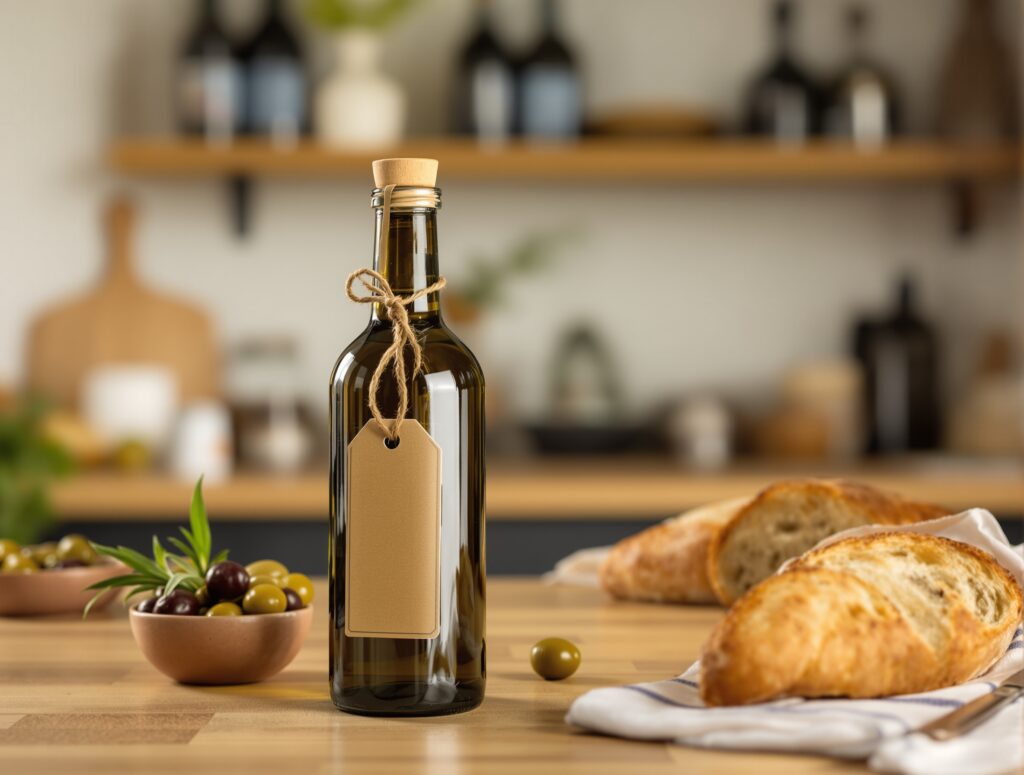
Dark green bottles filter damaging ultraviolet rays, while metal tins block light entirely, slowing rancidity when oil sits on a shelf or counter. Put that same bottle near the stove or in direct sunlight and rancidity speeds up—protective packaging helps most when you also keep it away from heat and light.[6]
- Dark glass: strong UV filtering, good seal options, easy to decant into smaller bottles.
- Metal tin: full light barrier, durable, best kept dent-free and tightly capped.
- Stainless steel: excellent oxygen and light protection when sealed, common in professional storage.
- Bag-in-box: collapses as you pour, minimizing headspace and oxygen exposure.
Pick the most light-blocking, best-sealing container you’ll actually keep closed, then store it away from heat.
Shelf Life of Olive Oil After Opening
Once opened, olive oil often tastes freshest in the earlier part of its use, because oxygen exposure speeds oxidation and rancidity. Unopened, bottled olive oil is generally at its best within about two years when stored well, though it varies by product and conditions.
If you’ve ever wondered why a “fine” oil suddenly tastes dull, timing is often the missing piece. Every pour swaps in a bit more air, and the clock keeps moving.
How Long Does Olive Oil Last After Opening
Some sources note that peak flavour may be most noticeable in the first 30 to 60 days after opening, but the real timeline depends on the oil and how it’s stored (heat, light, and how often the bottle is opened). When a bottle sits half-full for weeks, the bigger air gap can make the drop feel much faster.
What Factors Influence Olive Oil Shelf Life After Opening
Oxygen presence sets the oxidation pace, so every uncapped minute and every open pourer can shorten shelf life. Conditions matter as well—warm, bright kitchens cut shelf life compared with a cool, dark cupboard.
How to Extend the Shelf Life of Opened Olive Oil
Keep the lid tight between uses and skip open pourers that feed air into the bottle all day. Avoid frequent transfers to new containers—each move brings in oxygen and can shorten shelf life. If you do decant, make it a one-time move into a smaller, clean container you’ll use up next.
| Habit | Effect on freshness |
|---|---|
| Tight cap after every pour | Reduces oxygen contact and slows oxidation |
| Open pourer spout | Increases oxygen exposure and speeds staling |
| Frequent decanting | Adds oxygen during transfers and can shorten shelf life |
Treat olive oil like a fresh ingredient: buy a size you’ll finish reasonably quickly, and protect it from air every day.
Olive Oil Rancidity and Quality Loss
Olive oil goes rancid when oxidation and photo-oxidation break down aroma compounds and drag quality down. Oxygen and heat speed the slide, so storage choices shape how long the oil tastes fresh.
The tricky part is that rancidity doesn’t announce itself all at once. A bottle can seem “fine” until you compare it with a fresher oil or notice the aroma has faded.
What Causes Olive Oil Rancidity
Exposure to oxygen, light, and heat drives rancidity by accelerating oxidation that leads to spoilage. Keeping olive oil next to the stove can cut shelf life because repeated warming raises the oxidation rate.
How Does Oxidation Affect Olive Oil Flavour and Nutrition
With oxygen exposure, olive oil loses flavor, aroma, and nutritional benefits as it degrades. Light adds another push: UV rays can trigger photo-oxidation, making delicate oils taste flat faster than oils kept in darkness.
How to Check for Quality Loss (and When to Discard)
At home, the most practical “test” is sensory: smell and taste a small amount, ideally comparing it to a fresher bottle if you have one. Oxidation-related defects can show up as a dull aroma, a waxy or greasy mouthfeel, or a stale finish rather than the fresh, fruity notes you expect.
- Smell first: fresh extra virgin olive oil typically smells fruity/green; a flat or stale smell can signal oxidation.